New Frontiers in QCD 2026

→ Asia/Tokyo
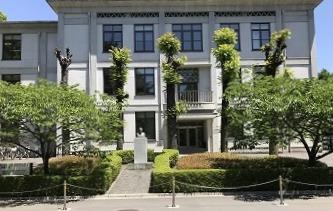
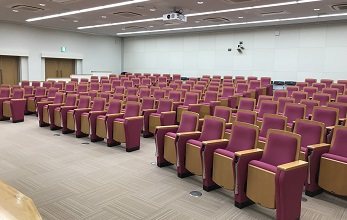
Panasonic Auditorium, Yukawa Hall (YITP, Kyoto University)

Panasonic Auditorium, Yukawa Hall

YITP, Kyoto University

Kitashirakawa Oiwakecho, Sakyo Ward, Kyoto, 606-8267
Yoshimasa Hidaka (YITP)
Description

⚠️ Important Notice: (Scam Emails)  Some participants have received scam emails from third parties offering to arrange hotel reservations.  The organizers do NOT work with any external travel agency.  If you receive such an email, please ignore or delete it.

On this long-term workshop

The Yukawa Institute for Theoretical Physics (YITP) has organized long-term workshops under the Yukawa International Program of Quark-Hadron Sciences (YIPQS) since 2007, supported by MEXT, Japan, to promote intensive discussions and collaborations on selected research topics.

The present workshop, “New Frontiers in QCD 2026", continues the series held in 2006, 2008, 2010, 2013, and 2018. It aims to provide a comprehensive forum for discussing recent advances and future directions in quantum chromodynamics (QCD).

Recent progress in QCD spans theory, experiment, observation, and computation. Astrophysical observations of neutron stars, heavy-ion collision experiments, and prospects from the future Electron–Ion Collider are providing new insights into dense matter, the quark–gluon plasma, and nucleon structure. At the same time, theoretical developments—including new approaches to the sign problem and generalized global symmetries—are deepening our understanding of gauge theories.

This workshop brings together researchers across disciplines to review recent developments and explore future directions in QCD. Participants will stay at YITP and engage in extended discussions in a collaborative environment in Kyoto.

Schedule & Venue

Start: October 12,   Close: November 13, 2026
Note: The scientific program will begin on October 13 (Tue) since October 12 is a national holiday in Japan.

Panasonic Auditorium, Yukawa Hall, Yukawa Institute for Theoretical Physics, Kyoto University, Kyoto, Japan
Directions to the Yukawa Institute for Theoretical Physics (YITP) can be found on this page.

Registration Deadlines

Onsite participants requesting visa support and/or financial support: July 15, 2026
Onsite participants without support:  August 20, 2026 (extended from August 15)
Online participants: November 13, 2026

Due to limited seating, desk space, and facilities, the number of participants may be restricted. We appreciate your understanding and apologize for any inconvenience this may cause.

Submission for the presentations

Submission deadline:  August 20, 2026 (extended from August 15)
The selection process for contributed talks will take place around mid-July. Please note that all presentations will be conducted in person only.

Workshop topics

(1st week, Oct. 12-16) High-energy QCD

  • Three-Dimensional Structure of Nucleons

  • Origins of Spin and Mass

  • Small-x Physics and Gluon Saturation

  • Hadron Structure from Lattice QCD

  • Theoretical Preparations for Future Experimental Data at EIC

(2nd week, Oct. 19-23) QCD Matter under Extreme Conditions

  • Heavy-Ion Collisions and QGP Dynamics
  • Exploring the Phase Diagram of QCD: Lattice QCD and Analytical Approaches

(3rd  week, Oct. 26-30) Symposium


(4th week, Nov. 2-6) Dense QCD Matter and Compact Stars

  • Neutron Star Structure and the Equation of State
  • Multimessenger Astronomy: Supernovae and Neutron Star Mergers
  • Quarkyonic Matter and Color Superconductivity in High-Density QCD
  • Numerical Approaches to Dense QCD

(5th week, Nov. 9-13) Theoretical Developments in QCD and related topics

  • Mechanisms of Confinement in QCD-like Theories
  • Nonperturbative Phenomena of Defects and Low-Dimensional QFTs
  • Generalized Global Symmetries and Their Applications
  • New Approaches in Lattice Gauge Theories 

Organizers

International Advisory Committee

Elke Aschenauer (BNL)
Daniël Boer (Groningen U.)
Shin-Ichi Esumi (Tsukuba U.)
Margarita Garcia Perez (Madrid, IFT)
Zohar Komargodski (Stony Brook U.)
Aleksi Kurkela (Stavanger U.)
Cristina Manuel (CSIC, Catalunya)
Yannick Meurice (Iowa U.)
Owe Philipsen (Frankfurt U.)
Jianwei Qiu (JLab)
Sanjay Reddy (Washington U.)
Misha Stephanov (Illinois U.)
Mithat Ünsal (NCSU, Raleigh)
Raju Venugopalan (BNL)

Organizing committee

Yoshimasa Hidaka (YITP, chair) 
Yukinao Akamatsu (National Institute of Technology, Matsue College)
Takahiro Doi (Kyoto University)
Yuki Fujimoto (Niigata University)

Kenji Fukushima (University of Tokyo)
Taku Gunji (University of Tokyo)
Masaru Hongo (Niigata University)
Etsuko Itou (YITP)
Masakiyo Kitazawa (YITP)

Toru Kojo (Tohoku University)
Chiho Nonaka (Hiroshima University)
Yasuki Tachibana (Kyushu Institute of Technology) 
Yuya Tanizaki (YITP)

Kazuhiro Watanabe (Tohoku University)
Arata Yamamoto (RIKEN)
Naoki Yamamoto (Keio University)
Sponsor

YITP

Supported by

RIKEN iTHEMS

International Leading Research: Origins of Matter Explored through Femtoscale Quantum Many-Body Systems

Registration
Registration
Participants
    • Week 1: High-energy QCD

      Oct 12–16

      • 1
        Three-Dimensional Structure of Nucleons: Overview of TMDs and GPDs

        Transverse momentum department parton distributions (or simply, TMDs) and generalized parton distributions (GPDs) are fundamental quantum correlation functions of quarks and gluons (collectively referred to as partons) of nucleons and nuclei. They encode rich information that can unravel many aspects of the confined quark and gluon structure of nucleons in momentum and coordinate space, respectively, as well as emergent hadronic properties, including the mechanical properties and spin and mass decompositions. In this presentation, we will give a brief overview on the theory and phenomenology of TMDs and GPDs, focusing on fundamental differences in extracting them from physical processes, especially, the inclusive vs. exclusive processes. Since we only measure scattering cross sections of hadrons and leptons, and can’t measure quarks and gluons directly in isolation, we will carefully distinguish the true confined hadron structure and properties from the collision-induced phenomena once the probed hadron is broken.

        Speaker: Jianwei Qiu (Jefferson Lab)
      • 11:00 AM
        Coffee break
      • 2
        From Scattering Events to Partonic Images: New Methods for QCD Global Analysis

        Extracting the quark and gluon structure of hadrons from high-energy scattering data is a challenging inverse problem that requires flexible representations, efficient QCD calculations, and reliable uncertainty quantification. I will discuss recent progress toward a computational framework that connects measured events directly to the underlying partonic correlation functions. A central component is the event-level analysis being developed within the SciDAC QuantOm project, which combines theoretical calculations with realistic experimental conditions in a scalable inference workflow. I will then describe complementary advances in reconstructing hadron structure, including finite-element-based methods for generalized parton distributions and pixel-based Bayesian imaging of transverse-momentum-dependent distributions using generative AI. Finally, I will discuss ongoing extensions of these ideas to collinear parton distribution functions and fragmentation functions within the JAM global-analysis framework. Together, these developments point toward a unified approach that uses modern computational and machine-learning tools to extract maximal information from current experiments and future measurements at the Electron–Ion Collider.

        Speaker: Nobuo Sato (Thomas Jefferson National Accelerator Facility)
      • 12:30 PM
        Lunch break
      • 3
        Free discussion
      • 3:00 PM
        Afternoon tea
      • 4
        Free discussion
    • Week 1: High-energy QCD

      Oct 12–16

      • 5
        Parton orbital dynamics from exclusive meson productions at the EIC
        Speaker: Shohini Bhattacharya (University of Connecticut)
      • 11:00 AM
        Coffee break
      • 6
        Photon GTMDs in lepton and heavy-quark pair production in UPCs

        In this talk I will discuss azimuthal modulations in lepton and heavy-quark pair production in ultraperipheral collisions (UPCs) of highly charged ions. A full description of the cross section in terms of Generalized Transverse Momentum Dependent parton distributions (GTMDs) for photons is given including a consideration of the Fourier transform to impact parameter space. In particular, this leads to a feed-in mechanism among harmonics of different orders, which in principle generates harmonics of all (even) orders. We show that the normalized differential cross section changes considerably with the produced particle mass, which should be discernible in UPCs at RHIC and LHC. For the numerical results we adopt several models for the photon GTMD correlator, and find that all of them are in fairly good agreement with each other and with UPC data from STAR. We also present results for various azimuthal modulations for RHIC kinematics and compare $e^+ e^-$ production with the production of heavier particles. These results exhibit interesting mass-dependent features in the asymmetries that may help study the anisotropies arising from the underlying photon GTMD description.

        Speaker: Cristian Pisano (University and INFN Cagliari)
      • 12:30 PM
        Lunch break
      • 7
        Free discussion
      • 3:00 PM
        Afternoon tea
      • 8
        Free discussion
    • Week 1: High-energy QCD

      Oct 12–16

      • 9
        Consistent handling of collinear logarithms in the NLL BK equation

        The Balitsky-Kovchegov evolution equation, which governs QCD processes at high energy and can account for gluonic saturation effects in this limit, suffers from the presence of large collinear logarithms that make the perturbative expansion unstable. We develop a systematic framework to deal with such logarithms in terms of a scheme transformation within the standard high energy Operator Product Expansion. The resulting NLL BK equation is free from collinear double logarithms and numerically more stable. We will also discuss how other solutions developed in an ad-hoc fashion can be recovered with our framework, and how to deal with single logarithms in a similar manner.

        Speaker: Renaud Boussarie (CPHT, CNRS, Ecole polytechnique, IP Paris)
      • 11:00 AM
        Coffee break
      • 10
        TBD
      • 12:30 PM
        Lunch break
      • 11
        Skewness dependence of the pion and kaon GPDs

        In this talk, I will present the skewness dependence of the pion and kaon generalized parton distributions at different momentum transfers within the covariant Nambu-Jona-Lasinio model, employing the Schwinger proper-time regularization scheme to regulate ultraviolet divergences and implement an effective description of quark confinement. Our prediction results for the pion and kaon GPDs and PDFs (forward limit) for different momentum transfer and skewness at scales 4 and 27 GeV^2 and their generalized form factors will be presented, and the comparison with experimental data, lattice QCD, and global analysis results will be further discussed.

        Speaker: Parada Hutauruk (SKCM2, Hiroshima University)
      • 12
        Quark Orbital Angular Momentum from One-Loop GTMD–GPD Matching

        Generalized transverse-momentum-dependent distributions (GTMDs) provide a phase-space description of partons and a natural framework for studying orbital angular momentum in the nucleon. In particular, the canonical quark orbital angular momentum (OAM) density is encoded in a transverse-momentum moment of the GTMD $F_{14}$. Beyond tree level, however, this moment is ultraviolet divergent, and its relation to collinear distributions must be defined through a renormalized small-transverse-distance expansion, $b$.

        In this talk, I will present our one-loop small-$b$ matching of $F_{14}$ onto collinear generalized parton distributions in the flavor-nonsinglet sector at zero skewness. A central feature is that, although $F_{14}$ belongs to the leading-twist GTMD parametrization, the OAM projection requires not only the twist-two GPDs $H$, $E$, and $\widetilde{H}$, but also the genuine twist-three quark–gluon–quark distributions $\Phi_F$​ and $\widetilde{\Phi}_F$. I will outline the background-field calculation and the treatment of rapidity, ultraviolet, and collinear singularities, including soft-factor subtraction. I will also discuss how the resulting matching consistently connects CSS evolution of the finite-$b$ GTMD with DGLAP and BFLK evolution of the twist-two and twist-three collinear sectors. These results provide a perturbative bridge for interpreting proposed EIC observables sensitive to canonical quark OAM, by anchoring the short-distance GTMD to twist-two and genuine twist-three GPDs with consistent scale evolution.

        Speaker: Tomoya Uji (The University of Tokyo)
      • 13
        Forward Hadron Production in p–p, p+Pb and d+Au Collisions within the CGC-Based Monte Carlo Model

        The Color Glass Condensate (CGC) is the effective theory for dense gluonic matter in the small-x regime of QCD, with forward-rapidity particle production in p+A collisions offering a sensitive testing ground. In this presentation, we introduce MC-CGC v3.0, a CGC-based Monte Carlo model upgraded to handle heavy-ion systems. This numerical approach extends previous analytic studies by incorporating non-perturbative contributions that were largely neglected before. We then apply the model to forward hadron production in p+p, p+Pb, and d+Au collisions at RHIC and LHC energies. Our results show the model maintains a reasonable agreement with measurements across different rapidity windows, suggesting the robustness of the CGC framework when these contributions are consistently treated.

        Speaker: Shujun Zhao (Sophia University)
      • 3:30 PM
        Coffee break
      • 14
        Gravitational form factors and mass decompositions for hadrons from three-loop energy-momentum tensor in QCD

        Gravitational form factors are related to a particular moment of the GPDs, and are relevant to EIC physics. Gravitational form factors are defined as the hadron matrix elements of the energy-momentum tensor (EMT). In QCD, the gauge-invariant part of the EMT is expressed as a sum of the several composite operators built from quark and gluon fields. Although the total EMT is finite and is not renormalized due to energy-momentum conservation, the individual components represented by the gauge-invariant composite operators are UV divergent and are renormalized; as a result, their physical interpretations are not straightforward due to their sophisticated renormalization mixing and the associated trace anomalies. Even within the MSbar scheme in the dimensional regularization, different choices of the composite-operator basis for renormalization lead to different prescriptions for treating the renormalization mixing, and these prescriptions appear to give inequivalent results, creating a source of confusion among the researchers. We clarify the relations between those inequivalent results and discuss the consequences for the renormalized quark and gluon contributions to the EMT as well as to its trace. On this basis, we derive the EMT in terms of the renormalized composite operators at the three-loop level in the MSbar scheme. We also make contact with the four-loop extension by Ahmed, Chen, and Czakon [JHEP 01 (2023) 077], and with the two-loop results based on the gradient-flow formalism by Harlander, Kluth, and Lange [Eur. Phys. J. C 78 (2018) 944], which provide important cross-checks of our three-loop results.
        As applications of our three-loop renormalized EMT, we discuss quantitative evaluations of the proton properties, taking into account the empirical information of a few relevant non-perturbative parameters: we present a quantitative evaluation of the forward values of the twist-four gravitational form factors \bar{C}_q and \bar{C}_g, which have been argued to be related to the quark and gluon contributions to the internal pressure. We also discuss the proton mass decomposition by reorganizing the terms appearing in our three-loop EMT. We further present the corresponding results for the pion, which exhibit quite different behaviors from those of the proton.
        This presentation is based on our papers, 2511.18310, JHEP03 (2023) 013, JHEP01 (2019) 120, JHEP12 (2018) 008, and on our work in progress.

        Speaker: 和廣 田中 (順天堂大学)
      • 15
        Treatment of Resonances in QCD Sum Rules — The Case of the Baryon Decuplet

        A framework is presented in which the baryon decouplets treated as a resonance in QCD sum rules and its decay width is determined self-consistently. The δ-pole approximation of the two-point correlation function is analytically continued to a complex-
        conjugate pair of poles characterized by a mass, a width, and a complex residue, an expression
        that reduces exactly to the δ pole as the width vanishes. The two-point correlator is found to
        constrain the mass and the residue but to leave the width degenerate with the mass; the width
        is therefore supplied by a light-cone three-point sum rule for the strong coupling; e.g. g∆Nπ for Δ++.

        Speaker: 茂義 青山 (KEK)
      • 16
        Mini party
    • Week 1: High-energy QCD

      Oct 12–16

      • 17
        TBD
        Speaker: Kyle Lee (Argonne)
      • 11:00 AM
        Coffee break
      • 18
        Effect of TMD Evolution on Sivers asymmetry in J/psi production processes at EIC

        I would present recent developments in theoretical calculations of Sivers asymmetry in almost back-to -back photo and electroproduction of J/psi and jet/photon production in the kinematics of EIC. J/psi production is treated in NRQCD. I'll show that this provides an excellent tool to probe the gluon Sivers function. I'll discuss the effect of TMD evolution and scheme dependence on the cross section and asymmetry.

        Speaker: Asmita Mukherjee (IIT Bombay)
      • 12:30 PM
        Lunch break
      • 19
        Free discussion
      • 3:00 PM
        Afternoon tea
      • 20
        Free discussion
    • Week 2: QCD Matter under Extreme Conditions

      Oct 19–23

      • 21
        Initial-state and non-equilibrium effects on spin transport in nuclear collisions

        Recent measurements of the global spin polarization of $\Lambda$ hyperons further indicate the presence of strong vorticity of the rotating QGP and manifest the relativistic Barnett effect at the subatomic scale. Nevertheless, the related spin alignment phenomena of vector mesons and local spin polarization, especially in proton-nucleus collisions, cannot be simply explained by the vorticity as the late-time effect with the underlying equilibrium assumption for the spin degrees of freedom of hadrons or strange quarks. We review recent progress in spin transport phenomena in high-energy nuclear collisions, focusing instead on the early-time and non-equilibrium effects that extend beyond standard thermal-equilibrium frameworks. We introduce quantum kinetic theory as a microscopic framework for tracking non-equilibrium spin dynamics of quarks and hadrons, highlighting its key applications. In particular, we examine how non-equilibrium, overpopulated gluons in the early stages influence both the spin alignment of vector mesons—via quark–antiquark spin correlations during coalescence—and the local spin polarization of $\Lambda$ hyperons. We may further discuss non-equilibrium $\Lambda$ polarization induced by a rotating pion gas, with potential applications to intermediate- and low-energy heavy-ion collisions.

        Speaker: Di-Lun Yang (Academia Sinica)
      • 11:00 AM
        Coffee break
      • 22
        Real-time stochastic dynamics near a QCD critical point

        We describe recent results obtained from numerical simulations
        of stochastic fluid dynamics near a QCD critical point. We
        discuss results for the dynamic critical exponent, the
        critical behavior of transport coefficients, and the relaxation
        rate of equal-time correlation functions. We also discuss
        some exploratory studies of stochastic relativistic fluid
        dynamics.

        Speaker: Thomas Schaefer (North Carolina State University)
      • 12:30 PM
        Lunch break
      • 23
        Free discussion
      • 3:00 PM
        Afternoon tea
      • 24
        Free discussion
    • Week 2: QCD Matter under Extreme Conditions

      Oct 19–23

      • 25
        From proton cumulants to baryon number susceptibilities at finite density

        Lattice QCD based extrapolations and functional QCD methods point to a candidate critical region near T ≈ 100–120 MeV and μ_B ≈ 600–650 MeV, motivating the search for its imprint on fluctuations in heavy-ion collisions. I will first briefly review these predictions, including the latest extensions to the strangeness-neutral conditions of heavy-ion collisions. I will then discuss how to connect equilibrium expectations for baryon number fluctuations to experimental measurements in the RHIC Beam Energy Scan program, which requires controlling several non-critical effects. I will discuss how exact baryon number conservation, kinematic acceptance, and the mapping from baryons to protons affect the measured cumulants and factorial cumulants. Finally, I will present a Bayesian framework that embeds arbitrary baryon number susceptibilities into realistic hydrodynamic freeze-out via maximum-entropy particlization. Applying it to collider-mode BES data, I will extract the susceptibilities of QCD matter at finite baryon density at each collision energy, confront them with lattice-based expectations, and discuss implications for the critical point search.

        Speaker: Volodymyr Vovchenko (University of Houston)
      • 11:00 AM
        Coffee break
      • 26
        Fluctuation probes of the QCD phase structure: results and prospects

        Event-by-event fluctuations, such as those of charged-particle multiplicities, mean transverse momentum and particle ratios, have been identified as sensitive observables for the study of QCD phase structure, giving access to the thermodynamics of the medium created in heavy-ion collisions and to the possible existence of a critical point. I will review the current experimental picture from fluctuation measurements across collision energies, with a focus on recent high-precision results from the RHIC Beam Energy Scan, and outline the prospects for upcoming measurements at current and future facilities.

        Speaker: Ashish Pandav (LBL, Berkeley)
      • 12:30 PM
        Lunch break
      • 27
        Free discussion
      • 3:00 PM
        Afternoon tea
      • 28
        Free discussion
    • Week 2: QCD Matter under Extreme Conditions

      Oct 19–23

      • 29
        JETSCAPE Event Generators: What Are They and What Can You Do With Them?

        We discuss the merits of using event generators in heavy ion physics and related systems, and give an overview of the family of JETSCAPE frameworks. We discuss recent updates and future plans regarding these event generators. We also present some recent results obtained with these frameworks, including a 3+1D Bayesian calibration of the soft sector using A+A and p+A data, a pilot study for Bayesian inference using combined data from the soft and hard sector of heavy ion collisions, and a discussion of direct photons in nuclear collisions.

        Speaker: Rainer Fries (Texas A&M University)
      • 11:00 AM
        Coffee break
      • 30
        TBD
        Speaker: Gokce Basar (UNC Chapel Hill)
      • 12:30 PM
        Lunch break
      • 31
        Free discussion
      • 3:00 PM
        Afternoon tea
      • 32
        Free discussion
    • Week 2: QCD Matter under Extreme Conditions

      Oct 19–23

      • 33
        Bulk-viscous dissipation effects in the merger of compact stars

        The advent of gravitational-wave astronomy is revolutionizing the study of neutron-star
        physics. It can provide valuable information about the equation of state of dense nuclear
        matter, following the detection of mergers
        of binary neutron-star systems.
        There are strong indications that transport coefficients will be necessary for the study of
        neutron-star mergers. In particular, bulk viscosity effects appear to operate on the same
        timescales as those relevant to the merger process itself. In this talk we will review these ideas,
        assuming that the stars are composed of quark matter., and affect the tidal heating in
        the inspiral phase of the merger. We will also show that the bulk viscous pressure
        of quark matter behaves as a viscoelastic Burgers fluid.

        Speaker: Cristina Manuel (Institute for Space Sciences (CSIC, IEEC))
      • 11:00 AM
        Coffee break
      • 34
        Jets and medium-induced radiation during the early nonequilibrium stages in heavy-ion collisions

        One of the central open questions in heavy-ion collisions is how the initially far-from-equilibrium plasma of deconfined quarks and gluons evolves toward local thermal equilibrium, a process known as hydrodynamization. Despite its importance, direct experimental signatures of this early pre-equilibrium stage remain elusive. Hard probes, such as jets, produced at very early times, offer a promising window into these dynamics. In this talk, I present results for the medium-induced gluon radiation from an energetic parton traversing the quark-gluon plasma, whose nonequilibrium time evolution is simulated within QCD kinetic theory. I show that the resulting radiation pattern deviates significantly from expectations based solely on thermal emission, providing new insights into the non-equilibrium nature of the medium. These differences can be linked to the underlying bottom-up equilibration process of the plasma, which consists of under- and overoccupied stages, and whose imprints are visible in the spectrum.

        Speaker: Florian Lindenbauer (Massachusetts Institute of Technology)
      • 12:30 PM
        Lunch break
      • 35
        Diffusive hydrodynamic description of QCD matter in nuclear collisions

        We present a novel hydrodynamic model of nuclear collisions in which baryon number, electric charge, and strangeness diffuse as coupled currents governed by the conductivity matrix [1], using a lattice-based four-dimensional QCD equation of state. Baryon diffusion transports net baryons toward midrapidity with growing strength at lower beam energies, while net strangeness develops a wave-like rapidity structure from strangeness-neutral initial conditions. We show that emulator-based inversion of identified particle yields across RHIC beam energy scan energies constrains most of the conductivity matrix.

        [1] AM, G. Pihan, B. Schenke, C. Shen, Phys. Rev. C 113, 054905 (2026)

        Speaker: Akihiko Monnai (Osaka Institute of Technology)
      • 36
        The QCD phase diagram for three-flavor Mobius domain-wall fermions

        We investigate the phase transition of QCD with three degenerate quark flavors at zero baryon chemical potential. Using Mobius domain-wall fermions as the lattice fermion formulation, we ensure excellent chiral symmetry preservation. Our simulations are performed at three different temporal lattice extents, $N_{t}=6,8,12$, with a fixed lattice spacing $a=0.1361(20)$ fm, corresponding to temperatures of 242(4), 181(3), and 121(2) MeV, respectively. We explore a range of quark masses and spatial volumes with aspect ratios $N_{s}/N_{t}$ spanning from 2 to 4. By analyzing the mass and volume dependencies of the plaquette, plaquette susceptibility, chiral condensate, chiral susceptibilities, and Binder cumulant, we identify the pseudocritical transition quark masses from our largest lattice volumes. For $N_t=6$, this is 184(10) MeV (determined from the plaquette susceptibility). For $N_t=8$ and 12, the transition points vary slightly depending on whether the total or disconnected chiral susceptibility is used, yielding ranges of $36(1)-39.1(9)$ MeV and $3.5(3)-3.7(2)$ MeV, respectively, in the $\overline{\text{MS}}$ scheme at a scale of $\mu=2$ GeV. The negligible volume dependence at $N_t=6$ and 8, combined with finite-size scaling analysis at $N_t=12$ revealing volume growth significantly weaker than expected for a first- or second-order phase transition, points to a continuous crossover at these specific quark mass points. Additionally, we study the effects of residual chiral symmetry breaking on the chiral condensate and chiral susceptibilities using two different values of $L_s$.

        Speaker: Yu Zhang (Bielefeld University)
      • 37
        Symmetry of Meson 2-point Correlation Functions in Finite Temperature QCD

        We report on our recent analysis of 2+1-flavor Lattice QCD at finite
        temperatures. We employ the Möbius domain-wall fermion action in order to
        keep the chiral symmetry well under control.

        We examine various symmetries using the two-point meson correlators
        near the critical temperature of the chiral phase transition.

        Speaker: Junxiong Nie (Osaka University)
      • 38
        Bayesian analysis of QGP formation based on core-corona picture in high-energy proton-proton collisions

        In extreme environments characterized by very high temperature and density, such as those realized in the early universe and the interior of neutron stars, a state of matter consisting of quarks and gluons, known as the quark-gluon plasma (QGP), is expected to emerge. QGP has been produced in high-energy heavy-ion collisions, enabling extensive studies of its properties. In contrast, whether QGP can be formed in small collision systems remains an open question and has become an important issue in recent high-energy collision experiments.
        In this work, we apply Bayesian inference to the Dynamical Core–Corona Initialization model, which simultaneously describes the dynamics of locally equilibrated matter (core), such as QGP, and nonequilibrium matter (corona). We quantitatively investigate fluid formation in proton-proton (pp) collisions. The model parameters controlling fluid formation are constrained using experimental data, and the resulting constraints are compared with those obtained from conventional, non-statistical fits.
        The posterior distributions obtained from the Bayesian analysis suggest a larger contribution from the fluid component than that indicated by the conventional fits. We further compare the inferred constraints obtained from different experimental observables to identify observables that are sensitive to fluid formation. In addition, we assess the model's ability to reproduce experimental data using the maximum a posteriori parameters, and discuss the applicability of the model and remaining challenges.
        Based on these results, we discuss the possibility of QGP formation in small collision systems and its quantitative assessment through Bayesian inference.

        Speaker: Akito Shigeyoshi (Sophia University)
      • 3:30 PM
        Coffee break
      • 39
        The screening spectrum of QCD up to Electroweak-scale temperatures

        Novel algorithmic developments have made it possible to perform efficient simulations of Lattice QCD at temperatures spanning up to the Electroweak scale. In this talk, I will present recent results on screening masses in several mesonic channels, for both static and non-static Matsubara sectors, obtained at 12 temperature values from 1 GeV up to 165 GeV. For each temperature, 3 or 4 lattice spacings are considered in order to confidently perform the continuum limit. A comparison of the available perturbative expansion with our high-precision results reveal significant discrepancies, and in some cases relevant non-perturbative contributions, up to the highest temperatures explored. The restoration of chiral symmetry in the explored temperature range is also discussed.

        Speaker: Pietro Rescigno (RIKEN RCCS)
      • 40
        Imaginary rotation breaks charge conjugation in hot QCD

        We point out a new phase structure of imaginarily rotating hot QCD: at zero quark chemical potential it has a phase in which charge conjugation $C$ is spontaneously broken and rotation alone induces an imaginary quark number density. At imaginary angular velocity $2\pi$ the existence of this phase is exact: the theory at $2\pi$ is nonrotating QCD at the Roberge-Weiss point, where $C$ is known to break above the endpoint temperature. On the rotation axis, the high-temperature one-loop potential of QCD reveals a finite window around $2\pi$ with two distinct transitions not fixed by the exact correspondence: a second-order $C$-breaking transition and a first-order locking of the holonomy onto the center elements within the broken phase.

        Speaker: Ms Rin Takada (The University of Tokyo)
      • 41
        QCD Matter in de Sitter Spacetime

        QCD matter exhibits a variety of nontrivial static and dynamical phenomena under external fields. While electromagnetic fields are well-known examples, recent studies have suggested that curved spacetime can also act as an external gravitational background for quantum matter and significantly affect its phase structure.

        Motivated by these developments, we address a rather fictitious but intriguing question: What would happen to QCD matter in an extremely rapidly expanding universe?

        In this talk, I will present our recent progress toward answering this question. In particular, I will discuss how rapid cosmic expansion affects QCD matter and present our latest results.

        Speaker: Sho Yoshida (the University of Tokyo)
      • 42
        Mini party
    • Week 2: QCD Matter under Extreme Conditions

      Oct 19–23

      • 11:00 AM
        Coffee break
      • 43
        What does the lattice QCD Dirac spectrum tell us about hot QCD?

        The spectrum of the Dirac operator is not a directly observable object,
        however, several bulk thermodynamic quantities can be expressed in terms of
        the Dirac spectral density. The most prominent example is the Banks-Casher
        relation that connects the order parameter of chiral symmetry breaking to the
        Dirac spectrum. Recently, above the crossover temperature, a rich and highly
        nontrivial structure has been uncovered in the lowest part of the Dirac
        spectrum, the region which is intimately connected to confinement and the
        realization of chiral symmetry. In the talk I will cover a selection of these
        results. In particular, I will show that the crossover to the high temperature
        phase is accompanied by an Anderson-type localization transition of the lowest
        part of the spectrum, and at high enough temperature a singular peak appears
        in the spectral density. As a result, a reinterpretation of the Banks-Casher
        relation is needed. The spectral peak can be fully understood in terms of a
        dilute, ideal gas of topological objects which make the chiral limit highly
        nontrivial, and are responsible for $U(1)_A$ symmetry remaining broken even
        above the crossover temperature.

        Speaker: Prof. Tamas G. Kovacs (Eötvös Loránd University, Budapest)
      • 12:30 PM
        Lunch break
      • 44
        Free discussion
      • 3:00 PM
        Afternoon tea
      • 45
        Free discussion
    • YKIS Symposium

      Oct 26–30

      • 46
        Opening
      • 47
        Nucleon tomography through the study of exclusive processes

        The study of hard exclusive processes in lepton-hadron and hadron-hadron collisions provides, through its sensitivity to generalised parton distributions (GPDs), information on multi-dimensional quark and gluon distributions and on the distribution of internal forces inside nucleons and nuclei. After an introduction to these concepts, existing and planned measurements will be presented and discussed. Here, the complementarity between different physics channels and collision systems will be highlighted.

        Speaker: Charlotte Van Hulse (Vrije Universiteit Brussel (VUB))
      • 48
        Glueball gravitational form factor within the Skyrme-Faddev model

        In this talk, I will present the recent results for the gravitational form factors of the scalar Hopfion glueball within the Skyrme–Faddeev model, which is characterized by the nontrivial Hopf topological invariant. The extraction of the form factors $A(t)$ and $D(t)$ from the matrix element of the energy–momentum tensor and the prediction results for $A(t)$ and $D(t)$ will be presented and discussed.

        Speaker: Dr Parada Hutauruk (SKCM2, Hiroshima University)
      • 10:25 AM
        Coffee break
      • 49
        Mining for gluon saturation at colliders

        A central goal of the future Electron-Ion Collider and of upcoming upgrades at the Large Hadron Collider is the search for a new regime of nuclear matter known as the Color Glass Condensate (CGC). In this extreme state, matter is dominated by an exceptionally dense population of gluons, the particles responsible for binding quarks inside protons and nuclei. Over the past two decades, predictions from the CGC effective theory have been confronted with data from HERA, RHIC, and the LHC, yielding intriguing hints of gluon saturation, although definitive evidence remains elusive.

        In this presentation, I will review recent developments in the CGC framework and discuss how this physics can be explored through measurements at current and future colliders. I will highlight several novel observables that offer promising new avenues for uncovering this dense gluonic regime. I will conclude with a brief discussion of the CGC’s broader connections to other areas of physics.

        Speaker: Farid Salazar (Temple University)
      • 50
        Nonperturbative particle production and evolution in the dynamic Glasma

        We have developed a new numerical model to tackle an important problem of heavy-ion physics: the missing link between the pre-equilibrium Glasma and the resulting quark gluon plasma (QGP) stage. Our model simulates the nonperturbative production and real-time dynamics of the quarks from the Glasma. In this presentation, we will introduce our model and report on the role of particle production that is necessary for the initial conditions of the QGP.

        The Glasma is modeled by the classical Yang-Mills equation on a real-time lattice. During the time evolution, the strong color fields are sampled and quarks are produced via the Schwinger mechanism. This mechanism is a nonperturbative effect, which cannot be captured by perturbative mechanisms such as those considered in effective kinetic-theories. After being produced, the quarks are evolved according to Wong's equations using a colored particle-in-cell algorithm. We will report how the obtained particle distribution includes various physics information that is necessary for the initial conditions of the QGP. This includes the initial inhomogeneities of electric charge and spin that originate from the quarks. Those are of particular importance for calculating experimental observables like electromagnetic probes and searching for the chiral magnetic effect (CME) in heavy-ion collisions.

        Speaker: Nicholas J. Benoit (Academia Sinica)
      • 12:00 PM
        Lunch Break
      • 51
        Quantum simulations of lattice field theory with qubits and qumodes
        Speaker: Felix Ringer (Stony Brook University)
      • 52
        Long-Range Heavy-Quarkonium–Nucleon Interactions in Chiral EFT: Comparison with Lattice QCD

        Chiral effective field theory (chiral EFT) provides a systematic framework for understanding the long-range forces between hadrons based on QCD. Recent advances in femtoscopic measurements 1 have expanded experimental access to hadron–hadron interactions beyond the nucleon–nucleon system, while lattice QCD has provided quantitative results for heavy-quarkonium–nucleon interactions at a near-physical pion mass 2. Since heavy quarkonia are isoscalar, one-pion exchange is absent, and two-pion exchange provides the leading long-range force. In standard chiral power counting, the leading two-pion-exchange contribution appears at N3LO, whereas the contribution involving the low-energy constant ($c_3$), known to be sizable in the nucleon–nucleon force because of the ($\Delta(1232)$) resonance, first appears at N4LO 3. We evaluate this N4LO contribution and find that it exceeds the N3LO one in the distance range of interest. Furthermore, including the N4LO contribution with the quarkonium chromo-polarizability ($\beta$) as the only fit parameter significantly improves agreement with the lattice QCD potential.

        References
        1 L. Fabbietti et al., Annu. Rev. Nucl. Part. Sci. 71, 377 (2021)
        2 Y. Lyu et al., Phys. Lett. B 860, 139178 (2025)
        3 J. Tarrús Castellà and G. Krein, Effective field theory for the nucleon-quarkonium interaction, Phys. Rev. D 98, 014029 (2018).

        Speaker: Manato Wada (Niigata University)
      • 53
        Cold, Dense 2-Flavour Symmetric QCD Phase and P-wave colour superconductors

        Much of the physics in the cold-dense region in the QCD phase diagrams are characterised by the formation of Cooper pairs on the Fermi surface. In two-flavour symmetric quark matter, a phase transition is expected to occur into the two-flavour colour superconducting (2SC) phase. A key feature of this phase is that certain quarks remain ungapped due to repulsive colour-symmetric interactions. However, it is well established that Cooper pairs can still form via higher-order perturbative effects in large angular momentum channels, even when the bare interaction is repulsive. We investigate this possibility in QCD by analysing the renormalisation group (RG) equations for the quark-quark interaction vertex at extreme densities, where the perturbative expansion is valid. We find that the favoured partial wave is the 3P2 channel, analogous to the neutron superfluid phase at intermediate densities. However, the BCS gap for these colour-symmetric quark pairs remains small.

        Speaker: 坂本 コナン (基礎物理学研究所)
      • 3:25 PM
        Coffee Break
      • 54
        Heavy Quark Dynamics at Nonzero Temperature

        Heavy quarks propagating through quark-gluon plasma provide a unique, experimentally accessible, opportunity to study the real-time dynamics of QCD in its strongly coupled regime. In the infinite heavy quark mass limit, the momentum change probability of a heavy quark in a thermal environment is characterized by the thermal expectation value of a Wilson loop featuring two long antiparallel timelike Wilson lines (along the direction defined by the heavy quark 4-velocity) with Wightman operator ordering. I will discuss the formulation of this Wilson loop, the KMS symmetry it enjoys, its calculation at weak coupling (in QCD and in $\mathcal{N}=4$ SYM), and its calculation at strong coupling (in $\mathcal{N}=4$ SYM via AdS/CFT). Time permitting, I will discuss these calculations in the context of heavy quark phenomenology in heavy ion collisions.

        Based on 2501.06289, 2504.21139, 2604.21895, 2606.02693.

        Speaker: Bruno Scheihing (Kavli Institute for Theoretical Physics, University of California Santa Barbara)
      • 55
        Recent developments in the HAL QCD method on hadron interactions in lattice QCD

        I present recent developments in the HAL QCD method on hadron interactions in lattice QCD. Topics cover optimized two-baryon operators, Hermiticity and non-Hermiticity in HAL QCD potentials, dibaryons, exotic hadrons such as $T_{cc}$ and $T_{bb}$, and experimental confirmation of hadron interaction extracted in the HAL QCD method by Femtoscopy.

        Speaker: Prof. Sinya Aoki (Fundamental Quantum Science Program, RIKEN)
      • 56
        Hyperons in nuclear matter toward dense QCD matter

        The properties of hyperon in nuclear matter provides an important link toward extending our understandings of neutron stars and QCD matter. We present our investigations of hyperon single-particle potentials in nuclear matter. Our recent efforts to construct a microscopic effective theory for QCD at finite density will also be presented.

        Speaker: Dr Asanosuke Jinno (KEK)
    • YKIS Symposium

      Oct 26–30

      • 57
        What can we learn about the cold matter equation of state of QCD while evading the sign problem?

        The equation of state of cold matter in QCD is a central issue in particle physics, nuclear physics as well as the astrophysics of neutron stars. Unfortunately, direct lattice calculation of the equation of state as a function of density using lattice methods are not viable due to an exponentially bad sign problem when a chemical potential is included. However, this need not mean that nothing can be learned about the equation of state of cold matter via lattice studies. This talk explores calculational strategies that evade the sign problem and can provide constraints on the cold matter equation of state via lattice studies of QCD.

        Speaker: Thomas Cohen (University of Maryland)
      • 58
        Anisotropic Holographic QCD: Phase Diagram and Signatures

        We study the phase structure of hot, dense QCD matter within five-dimensional anisotropic holographic models of Einstein–dilaton–Maxwell type, which support both primary and magnetic-field-induced anisotropies. The background equations are solved in fully analytic form for the light- and heavy-quark cases, allowing us to locate the first-order and crossover phase transitions and to construct the resulting phase diagram in the (chemical potential, temperature) plane. The jet quenching parameter, the drag force, the direct-photon emission rate, and the running coupling constant are computed as functions of temperature, chemical potential, magnetic field, and spatial anisotropy parameter, and their non-monotonic behavior is shown to trace out the critical regions of the diagram. Spatial anisotropy and an external magnetic field shift the transition lines and the position of the critical end point. Anisotropy-sensitive observables are thus established as practical probes of non-perturbative QCD in the extreme environments created in heavy-ion collisions.

        Speaker: Pavel Slepov (Steklov Mathematical Institute of RAS)
      • 10:15 AM
        Coffee break
      • 59
        QCD Thermodynamics and the Energy–Momentum Tensor on the Lattice

        Understanding QCD at high temperatures is essential for describing strongly interacting matter and the evolution of the early Universe. I will present a non-perturbative determination of the Equation of State of QCD with three massless quark flavours, covering temperatures from 3 GeV up to the electroweak scale and smoothly connecting to the low-temperature regime. The comparison with perturbation theory shows that higher-order terms, including non-perturbative contributions, remain relevant even at very high temperatures.

        This study relies on the formulation of QCD in a moving reference frame which also provides useful Ward identities for the non-perturbative renormalization of the energy–momentum tensor on the lattice. I will discuss a recent precise determination of the corresponding renormalization constants and their relevance in lattice QCD at finite temperature.

        Speaker: Michele Pepe (INFN - sezione Milano Bicocca)
      • 60
        Thermodynamics and Polyakov-Loop Potential in Accelerated QCD at Finite Temperature

        In this talk, I will report our recent achievements on the thermodynamics of finite-temperature QCD matter under acceleration.

        QCD Phase Transition under Acceleration
        Various phases of QCD matter have been studied with external parameters such as temperature, density, magnetic field, and rotation. Recently, acceleration has also attracted attention as an additional axis of the QCD phase diagram. It is well known that the Minkowski vacuum state is perceived as a thermal state under acceleration, which leads to a critical acceleration for the confinement-deconfinement phase transition. This observation motivates us to ask how the properties of finite-temperature QCD matter are modified under acceleration.

        Thermodynamics in Accelerated Systems
        We investigate the one-loop Polyakov-loop potential for accelerated QCD matter. There are subtleties in calculating the free energy and pressure in accelerated systems: different calculation methods lead to apparently different results. Here, we calculated the free energy in three ways: by a direct calculation in the accelerated frame, by using the energy-momentum tensor (EMT) in the accelerated frame, and by a direct calculation in the optical frame obtained through a Weyl transformation. We found that the EMT-based calculation in the accelerated frame agrees with the calculation in the optical frame, while the direct calculation in the accelerated frame naturally corresponds to the pressure along the acceleration direction (which, in fact, differs from the negative of the free energy).

        We also obtained the Polyakov-loop potential under acceleration. The potential becomes steeper as the acceleration increases, indicating that the system becomes more deconfined.

        Speaker: Yusuke Shimada (YITP, Kyoto University)
      • 12:00 PM
        Lunch
      • 61
        TBD
        Speaker: Dam Thanh Son (University of Chicago)
      • 62
        Dynamics of quantum vortex rings in superfluids

        It is well known that superfluid phonons, which are Nambu-Goldstone modes resulting from the spontaneous breaking of $U(1)$ symmetry, can be described in terms of a dual two-form gauge field. In this two-form language, quantized vortex lines are formulated as degrees of freedom carrying dual charges.
        In this work, we theoretically analyze the dynamics of a quantized vortex ring propagating in a superfluid within the framework of an effective field theory based on the two-form gauge field. Specifically, we first clarify the conditions on the radius and velocity required for a vortex ring moving at a constant speed to exist stably without collapsing. Furthermore, we investigate the damped oscillation dynamics arising from the interaction between an oscillating vortex ring and sound waves.

        Speaker: Ryo Miura (Niigata university)
      • 63
        Effective Field Theory of Surface Oscillations in Self-Bound Quantum Droplets

        Self-bound quantum droplets appear in various physical contexts, ranging from cold atomic gases to QCD matter such as those found in neutron stars. In this presentation, we discuss a universal effective field theory that describes the low-energy dynamics of small-amplitude surface oscillations in such diverse quantum droplets, independent of their microscopic binding mechanisms [1].
        Focusing specifically on superfluid droplets, we perform our analysis by explicitly coupling the degrees of freedom of internal bulk gapless phonons to surface deformations under a fixed particle-number constraint. By deriving the effective action, we determine the normal-mode eigenfrequencies $\omega_\ell$ for each angular momentum quantum number $\ell$. We demonstrate that these frequencies depend on a single dimensionless parameter measuring the ratio of surface tension to bulk compressibility energy. Furthermore, we identify a critical value of this parameter at which the breathing mode ($\ell = 0$) becomes mechanically unstable, and we discuss the canonical quantization of these surface modes into ripplons in the low-energy regime.
        A key advantage of this framework is its universality. The resulting description applies to the surface dynamics of generic nonrelativistic superfluids with a free interface, without relying on specific microscopic details. Consequently, this universal theory provides a robust theoretical foundation that is highly applicable to self-bound systems of dense QCD matter.


        Refference
        1. J. Mitsuhashi, K. Fujii, and M. Hongo, Effective theory of surface oscillations in self-bound superfluid droplets, Phys. Rev. A 114, 013303 (2026).

        Speaker: Jun Mitsuhashi (Niigata University)
      • 3:25 PM
        Coffee Break
      • 64
        Soft modes associated with QCD critical point and color superconductivity and Their Observability through Electro-magnetic Probes

        We give a systematic account of the soft mode dynamics of QCD critical point(QCD-CP) and the two-flavor color-superconductivity(2SC-CP).
        The QCD-CP of a second-order naturecomes to exist when an explicit chiral symmetry breaking is present at finite baryon density where the charge-conjugation symmetry is lost. Thus, the order parameter of it is a linear combination of the baryon density and the chiral scalar condensate, and the critical universality class is Z2, the same as that of the liquid-gas phase transition, say, of nuclear matter. Accordingly, the dynamical fluctuations of the order parameter in the normal phase has a dominant strength in the space-like region coming from the collective particle-hole excitation corresponding toden sity fluctuations; the peak energy of the collective mode goes down (softens) as the system approaches the QCD-CP in the normal phase and eventually vanishes there. This is the soft mode of the QCD-CP. We show that the photon self-energy in the medium can be greatly modified by double exciations of the soft mode by the Larkin-Aslamozov mechanism established in the metal superconductivity. Thus, quite similar physics can be applied to the soft mode assciated to the color-supercondyuctivity, provided that its phase transition is of second oeder or weak first order. In this talk, employing Nambu-Jona-Lasinio model, we show that the dilepton-pair production rate as well as the electric conductivity are anomalously enhanced near the critical points in the normal phase toward boththe 2SC and QCD-CP.

        Speaker: Prof. Teiji Kunihiro (YITP, Kyoto U.)
      • 65
        Quantum-Geometric Meissner Effect in Magnetized Color Superconductors

        We show that Landau quantization in strongly magnetized two-flavor color-superconducting quark matter suppresses the conventional Fermi-surface contribution to the transverse Meissner response, allowing it to be controlled by the quantum geometry of the quasiparticle states. As a result, the transverse Meissner mass scales with the pairing gap, in contrast to the conventional chemical potential scaling in the magnetized color-flavor-locked (CFL) phase. In the strong-field limit, this quantum-geometric response becomes directly tied to the Chern number of the lowest Landau level. The reduced transverse Meissner mass generates an intermediate propagation speed for magnetic disturbances along field lines, between relativistic CFL modes and crustal Alfvenic dynamics, with potential implications for kHz quasi-periodic oscillations in magnetars.

        Speaker: Noriyuki Sogabe (University of Osaka)
      • 66
        Hadron spectra and thermodynamics for all quark flavors from a universal Hagedorn temperature

        In this talk, I present our recent results on the hadron spectra in QCD. We show that hadrons in QCD follow a spectrum determined by string dynamics characterized by a universal Hagedorn temperature linked to the string tension. This behavior was recently established for light hadrons and glueballs [1, 2]. We also demonstrate that the same dynamics describes the heavy-flavor sector [3]. The resulting spectra reproduce lattice QCD thermodynamics of light and charmed hadrons and the observed spectra of hadrons across quark flavors without additional parameters. These results reflect the universal confining dynamics of QCD through the string tension.

        [1] Marczenko, Kovács, McLerran, Redlich PRD 112 (2025) 9, 096010
        [2] Marczenko, Redlich, PRC 114 (2026) 2, 025205
        [3] Marczenko, McLerran, Redlich, arXiv:2603.28668 (2026)

        Speaker: Michał Marczenko (Hiroshima University)
    • YKIS Symposium

      Oct 26–30

      • 67
        New developments and open problems in relativistic fluid dynamics

        Heavy-ion collision experiments have provided compelling evidence that quarks and gluons can behave as a strongly interacting, low-viscosity relativistic liquid over distance scales not much larger than the size of a proton. Meanwhile, gravitational-wave observations of binary neutron star mergers have made understanding the dynamics of extremely dense matter in strong gravitational fields increasingly urgent. These systems probe vastly different scales, yet both challenge our understanding of when relativistic fluid dynamics applies and how to formulate its equations consistently.

        In this talk, I will describe recent developments in our understanding of the onset of relativistic fluid behavior and its applicability far from equilibrium. I will present rigorous results that, under explicit conditions, establish causality and local well-posedness for two major frameworks of relativistic viscous fluid dynamics coupled to Einstein’s equations: Israel–Stewart theory and the Bemfica–Disconzi–Noronha–Kovtun formalism. I will discuss open questions concerning the physical and mathematical properties of relativistic viscous fluids dynamically coupled to strong electromagnetic and gravitational fields. Finally, I will examine whether, and under what conditions, the breakdown of fluid evolution is related to geodesic incompleteness, and what this connection could teach us about black hole formation in neutron star mergers.

        Speaker: Jorge Noronha (University of Illinois Urbana-Champaign)
      • 68
        Quantum-Metric Correction to Kinetic Theory and Liouville’s Theorem

        Quantum metric, which defines a distance on Hilbert space, has become an important notion in describing many-body physics. While quantum-metric effects in electric currents have been actively discussed in condensed matter physics, the fundamental aspects of kinetic theory incorporating quantum metric remain largely unexplored. In this talk, I will show general features of such a kinetic theory: quantum metric modifies Liouville’s theorem, and accordingly the conservation law as well as the very definition of physical currents. I will also discuss an application to chiral fermions, which yields the transport coefficients consistent with those derived from a quantum field theory. This formulation paves the way to potential applications of the quantum metric in high-energy physics and astrophysics.

        Speaker: Kazuya Mameda (Tokyo University of Science)
      • 10:15 AM
        Coffee break
      • 69
        Sof pion signatures of QCD chiral crossover at the LHC
        Speaker: Aleksas Mazeliauskas (Institute for Theoretical Phyiscs, Heidelberg University)
      • 70
        Towards to realistic QGP holographic model: recent results, challenges and perspectives

        In recent years the phase diagram of the QGP, produced in HIC, was investigated for light quarks (u, d, s) and heavy quarks (c, b) separately, and different types of the phase transition pictures in these pure cases were brought out. The realistic model construction requires to take into account, that light and heavy quarks should be present in the HIC products together. This problem raises a number of issues regarding the adequate description of such a mixture of light and heavy quarks, such as critical end point, Regge meson spectrum, the structure of phase transitions, energy loss etc.
        Working within the holographic bottom-up approach to the hot dense anisotropic QGP description, we use our previously developed instruments and the latest capabilities to solve this non-trivial problem.
        Presentation in progress

        Speaker: Kristina Rannu (Peoples' Friendship University of Russia (PFUR))
      • 12:00 PM
        Lunch break
      • 71
        The chiral phase transition in many flavour QCD and onset of the conformal window
        Speaker: Owe Philipsen (Goethe University Frankfurt, Germany)
      • 72
        A New Method for Locating a Tricritical Point Using Binder-Cumulant Derivatives and Its Application to Heavy-Quark QCD

        The QCD phase structure at finite temperature and density remains largely unexplored because of the sign problem. At purely imaginary chemical potential, however, lattice QCD simulations can be performed without this difficulty. In particular, at $\mu_q/T=i\pi/3$, the Roberge--Weiss (RW) transition occurs as a consequence of the $Z_3$ symmetry. The nature of the RW endpoint depends on the quark mass: it is a triple point in the heavy-quark region and becomes a $Z_2$ critical point as the quark mass decreases. A tricritical point is therefore expected to separate these two regimes.

        We propose a new method for locating this tricritical point using the temperature derivative of the Binder cumulant. Conventional analyses based on the Binder cumulant itself suffer from sizable finite-volume effects near tricriticality due to logarithmic corrections. Our method incorporates these corrections and uses the logarithm of the ratio of Binder-cumulant derivatives at two different volumes. The resulting peak allows us to determine the critical temperature and the thermal critical exponent $y_t$ simultaneously. Since $y_t$ takes distinct values for first-order, tricritical, and $Z_2$ critical behavior, it provides a useful criterion for identifying the phase structure.

        We apply this method to the RW endpoint in heavy-quark QCD using an effective action derived from the hopping-parameter expansion, including contributions up to N$^3$LO. The reduced computational cost of this approach enables simulations at large volumes with high statistics. Using these data and the new finite-size scaling analysis, we aim to determine the location of the tricritical point with improved systematic control and precision.

        Speaker: Tatsuya Wada (Kyoto University/YITP)
      • 73
        Hydrodynamic fluctuations in dissipative spin hydrodynamics for Bjorken flow

        In non-central heavy-ion collisions, the colliding nuclei carry a large amount of angular momentum, which can be transferred to the hot and dense partonic medium known as quark-gluon plasma (QGP) created in the interaction region. This gives rise to a vortical structure of the medium which is subsequently reflected in the polarization of final-state hadrons. Several theoretical frameworks have been developed to explain the spin polarization phenomenon of the detected hadrons. One such framework is spin hydrodynamics, in which spin degrees of freedom, or equivalently the total angular momentum, are incorporated as hydrodynamic variables. In this approach, each fluid element is assumed to possess both orbital and spin angular momentum $J=L+S$. Consequently, the hydrodynamic evolution of such a fluid must satisfy the conservation of total angular momentum in addition to the usual conservation laws. In the present work, we consider dissipative spin hydrodynamics up to second order. Such second order theories are expected to be consistent with linear stability and causality constraints. The novelty of spin hydrodynamic frameworks is the presence of spin dissipations and spin transport coefficients. These dissipations in energy momentum and spin tensor are accompanied by corresponding fluctuations in accordance with the fluctuation-dissipation theorem. Since coarse-graining results in the loss of information of microscopic degrees of freedom of the system, the hydrodynamic variables can fluctuate from event to event around their ensemble-averaged values. The fluctuations are manifestations of thermal noise and must be incorporated to achieve a consistent event-by-event description of the dynamical evolution of the system.

        In this work, we investigate the hydrodynamic fluctuations associated with the second-order dissipative spin hydrodynamic theory. The spin chemical potential is treated as a leading order term in the gradient expansion and it affects the equation of state
        We derive the spin hydrodynamic equations of motion for minimally extended second order spin hydrodynamics and also the Onsager coefficients associated with the noise correlators of the dissipative currents. We obtain the proper time evolution of conserved quantities and dissipative currents for a boost-invariant system using the Stratonovich algorithm. We show how fluctuations in the dissipative part of spin current evolve with proper time along with shear and bulk sector of the energy momentum tensor. This work establishes a general framework for incorporating hydrodynamic fluctuations into spin hydrodynamics

        Speaker: Sejal Singh (Sophia University, BITS Pilani)
      • 3:25 PM
        Coffee break
      • 74
        Lee-Yang zeros and edge singularity in a finite-size effective model

        Finite-size effects modify the QCD phase diagram not only at real but also at complex values of the thermodynamic parameters. In this talk, we discuss these effects in an effective model framework that can describe finite-size scaling and the Lee-Yang zeros in finite volumes, while exhibiting a critical point in the thermodynamic limit. We compare several methods for locating the criticality based on the Lee-Yang zeros and susceptibility ratios at finite sizes. These methods provide a consistent estimate for the critical point, while a careful treatment of corrections from irrelevant operators is also crucial for an accurate determination of its location.

        Speaker: Gyozo Kovacs (University of Wrocław & Wigner RCP)
      • 75
        Syncreticity with fractional 't Hooft instantons in the chiral phase transition

        The order of the chiral phase transition in the plane of temperature, $T$, and chemical potential, $\mu$, continues to puzzle. I conjecture that for massless quarks, the chiral phase transition at $(T_\chi,\mu_\chi)$ is syncretic: terms which break the axial $U(1)_A$ symmetry are fractional powers of 't Hooft determinants in the broken phase (for $N_c$ colors, an integer times $1/N_c$) but involve only integral powers of 't Hooft determinants in the chirally symmetric phase; terms symmetric under $U(1)_A$ remain of the same form for all $T$ and $\mu$. For three flavors, $N_f =3$, the chiral transition is predicted to be weakly first order, and could well be very weakly. For $N_f \geq 1$, the chiral transition is generically "beyond Landau", as for $T$ and imaginary $\mu$. This can be tested, now, for lattice QCD with $2+1$ flavors. In the plane of $T$-$\mu$ plane the phase diagram consists of ns two semi-circles: first for the restoration of chiral symmetry, and later for "deconfinement".

        Speaker: Mx rob pisarski (brookhaven national laboratory)
      • 76
        IR Phase & IR Decoupling: their Meaning & Purposes

        I will discuss key aspects of the infrared (IR) phase in QCD and vectorlike gauge theories in general. The phenomenon of IR decoupling, and its uses, will be given a particular attention.

        Speaker: Ivan Horvath (University of Kentucky)
    • YKIS Symposium

      Oct 26–30

      • 77
        Binary Neutron Stars: from macroscopic collisions to microphysics

        I will argue that if black holes represent one the most fascinating implications of Einstein's theory of gravity, neutron stars in binary system are its richest laboratory, where gravity blends with astrophysics and particle physics. I will discuss the rapid recent progress made in modelling these systems and show how the gravitational signal can provide tight constraints on the equation of state and sound speed for matter at nuclear densities. Finally, I will discuss how the merger may lead to a phase transition from hadronic to quark matter. Such a process would lead to a signature in the post-merger gravitational-wave signal and open an observational window on the production of quark matter in the present Universe.

        Speaker: Luciano Rezzolla (Institute for Theoretical Physics, Frankfurt, Germany)
      • 78
        Microscopic Equation of State: From In-Medium Hyperon Potentials to the Neutron-Star Matter

        Strangeness provides a unique bridge between laboratory hypernuclear physics and the composition of neutron star (NS) interiors. In this talk, I will present a microscopic study of dense matter containing Λ hyperons within the lowest-order constrained variational (LOCV) framework, using realistic spin- and parity-dependent ΛN and ΛΛ potentials constrained by available hypernuclear data. Building on our previous investigation of the hyperonic equation of state and NS structure, I will discuss new results for the momentum-dependent single-particle potentials of nucleons and Λ hyperons, including their decomposition into the underlying NΛ and ΛΛ contributions and relevant interaction channels. These results provide a direct microscopic view of how density, composition, and uncertainties in hyperonic potentials govern the in-medium behavior of hyperons. I will finally discuss how these microscopic findings can be connected with modern multimessenger constraints on NS matter.

        Speaker: Mahboubeh Shahrbaf Motlagh (University of Wroclaw)
      • 10:15 AM
        Coffee break
      • 79
        First-principles motivated priors for neutron-star equation-of-state inference

        As our understanding of cold, extremely dense matter grows, a multidisciplinary approach that combines recent progress in multimessenger neutron-star observations with theoretical knowledge of the equation of state (EoS) becomes increasingly essential. In this talk, I present a new physically motivated framework for encoding prior knowledge about dense matter arising from chiral effective field theory and perturbative quantum chromodynamics.

        The new method generates model-agnostic, nonparametric priors for neutron-star EoS inference that are stable, causal, and thermodynamically consistent by construction. It is based on constructing constrained Gaussian-process bridges, whose correlation properties can be tuned at will, allowing flexibility between conservative priors and theory-informed priors. Unlike existing nonparametric approaches, it does not rely on shooting procedures, intermediate likelihoods, or ad hoc switching between EoS representations.

        Speaker: Oleg Komoltsev (Goethe-Universität Frankfurt am Main)
      • 80
        Quark stars or neutron stars? A Bayesian analysis on the two-families scenario

        Hadronic stars and strange quark stars could coexist within the so-called two-families scenario. In this respect, hadronic matter and strange quark matter correspond to two distinct equilibrium phases described by two different equations of state. I will present the first detailed Bayesian analysis that makes use of astrophysical and laboratory data in order to constrain the equations of state adopted within the two-families scenario for hadronic and strange quark matter. In particular, in hadronic matter we consider the possible formation of hyperons and delta resonances within a class of non linear relativistic mean field models and in quark matter we consider the possible formation of a color-superconducting phase within a bag-like model. Results of the analysis indicate that while at the moment both the one-family and the two-families scenarios are compatible with the data, by comparing the Bayes factors of both models, the two-families scenario is favored with respect to the one-family scenario. In addition, I will present some testable predictions concerning the maximum mass, the radii and the compositions of hadronic stars. Finally, I will discuss possible astrophysical paths for the formation of quark stars.

        Speaker: Giuseppe Pagliara (University of Ferrara (Italy))
      • 12:00 PM
        Lunch break
      • 81
        QCD and quark matter in the neutron star cores

        Neutron stars are the densest astrophysical objects in our universe, reaching densities
        as high as those realized in ultrarelativistic heavy-ion collisions at the LHC. In these collisions
        ordinary nuclear matter melts into a new phase of elementary particle matter, quark matter.
        This naturally raises the question: does quark matter also exist inside neutron stars? The rapid
        advancement in neutron-star observations in combination with state-of-the-art theoretical calculations
        is providing us with an unprecedented view of the extreme matter deep in the cores of the stars.
        In my talk, I describe how recent advancements in theory of superdense matter inform us about
        what lies in the centers of neutron stars and how different constraints point to the existence of
        quark matter cores in large neutron stars.

        Speaker: Aleksi Kurkela (University of Stavanger)
      • 82
        Probing Neutron-to-Dark-Matter Conversion with Multimessenger Neutron-Star Observations

        Neutron stars provide a unique astrophysical laboratory for probing dark matter under extreme density and strong gravity. Motivated by dark-sector interpretations of the neutron lifetime anomaly, we investigate neutron-to-dark-matter conversion in dense neutron-star matter and its impact on the equation of state and stellar observables.

        We model baryonic matter within a non-linear $~\sigma-\omega-\rho~$ relativistic mean-field framework and include a fermionic dark component with repulsive self-interactions. By exploring the dark-particle mass and coupling parameter space, we study how neutron-to-dark-matter conversion modifies neutron-star masses, radii, and tidal deformabilities.

        To reduce the dependence on the uncertain baryonic equation of state, we perform the analysis using a set of baseline nucleonic equations of state rather than a single reference model. Confronting the resulting stellar sequences with massive-pulsar observations, gravitational-wave tidal constraints, and NICER mass--radius measurements allows us to identify dark-sector regions that are robustly excluded or remain compatible with current observations. Our results provide constraints on neutron dark-decay scenarios that are less dependent on the baryonic equation of state, connecting dark matter physics, the neutron lifetime anomaly, and supranuclear-density matter in neutron stars.

        Speaker: Davood Rafiei Karkevandi (University of Wroclaw, Institute of Theoretical Physics)
      • 83
        Phase Transition to Hyperon Matter in Neutron Stars using an Effective Model with Chiral Invariant Masses

        The baryon mass originates from spontaneous chiral symmetry breaking and a chiral invariant mass. The chiral invariant mass of hyperons has not been sufficiently considered. In this study, we investigate the dependence of the density at which hyperons appear on their chiral invariant masses in neutron star matter. We employ SU(2)_L x SU(2)_R chiral symmetry and introduce the chiral invariant masses of hyperons independently of the chiral invariant mass of nucleons. We find that the Lambda baryon can emerge in neutron star when the chiral invariant mass is as large as the vacuum mass. Neutron star observations may therefore constrain the chiral invariant mass of Lambda baryon.

        Speaker: Masayuki Kanazawa (Nagoya University)
      • 3:25 PM
        Coffee break
      • 84
        Novel Scalings of Neutron Star Mass, Radius, and Tidal Deformability for Probing the Core Equation of State

        Understanding the equation of state (EOS) of dense matter in neutron star cores remains one of the central challenges in nuclear physics and astrophysics. Recent multimessenger observations, including gravitational-wave signals from binary neutron star mergers together with X-ray and radio pulsar measurements, have opened unprecedented opportunities to probe matter at supranuclear densities. In this talk, I will present recent progress in developing novel, EOS-insensitive scaling relations connecting neutron star observables, namely mass, radius, and tidal deformability, to the EOS of dense matter in their cores. Derived from the relativistic stellar structure equations, these scalings establish direct links between astrophysical observables and key microscopic quantities, including the EOS parameter, defined as the pressure to energy density ratio, as well as the pressure, energy density, and sound speed at supranuclear densities. Implications for the maximum mass, conformal limit, and innermost-core EOS will also be discussed.

        Speaker: Dr Bao-Jun Cai (Fudan University)
      • 85
        Banquet
    • YKIS Symposium

      Oct 26–30

      • 86
        Anomalies versus the chiral phase transition in QCD

        QCD with massless quarks has a temperature-driven chiral phase transition. Contrary to historical analytic and numerical expectations, recent lattice simulations find no evidence for a first-order chiral transition for any number of massless flavors N_f studied. It is therefore natural to ask whether the transition might be second order for all N_f. I will explain the constraints on this possibility that follow from the anomaly structure of QCD. Combined with other known properties of QCD, these constraints suggest that if the chiral transition is second order for all N_f, then the transition is described by an exotic interacting 3d CFT with a conformal manifold.

        Speaker: Aleksey Cherman (University of Minnesota)
      • 87
        Understanding Color Confinement through Quantum Reference Frames and Relational Observables

        We present a formulation for understanding color confinement on the basis of quantum reference frames (QRFs) and relational observables. In the QRF approach to color confinement, colored quantities are not defined as isolated local fields, but rather as relational observables with respect to a color frame or a dressing field. By the Gauss law, local color charge is excluded from the physical bulk algebra, whereas semi-local data such as boundary fluxes and Wilson lines may remain. Color confinement is characterized by the absence of a globally well-defined long-distance color QRF capable of supporting isolated non-singlet relational observables. This formulation preserves the insight of the Kugo-Ojima type picture, while avoiding dependence on a particular covariant gauge, an unbroken global BRST symmetry, and a specific infrared confinement criterion. As concrete examples, we consider (1+1)-dim. Yang-Mills theory, (1+1)-dim. U(1) gauge-Higgs model, and the two-dim. U(1) gauge-Higgs model on H2 (AdS2) and three-dim. SU(2) gauge-Higgs model on H3 (AdS3) obtained by dimensional reduction of four-dim. SU(2) Yang-Mills theory restricted to symmetric-instanton sectors. Through explicit calculations in these examples and in controlled sectors, we provide nontrivial consistency checks for the validity of the present formulation. We also discuss prospects for four-dim. Yang-Mills theory and gauge-Higgs theories. QRF-based color confinement provides a relational formulation of why isolated colored asymptotic sectors are absent. At the same time, it clarifies the role played by topological defects and shows that other confinement criteria -- the Wilson-loop area law, the preservation of generalized symmetry, namely center one-form symmetry, and the restoration of residual gauge symmetry -- can be organized as manifestations of a common QRF structure. arXiv:2606.29668 [hep-th]

        Speaker: Kei-Ichi Kondo (Chiba University)
      • 10:15 AM
        Coffee break
      • 88
        Recent progress on dense QC2D

        We present recent results from lattice simulations of dense 2-colour QCD with Wilson fermions, with particular emphasis on (1) thermodynamics, including the speed of sound; (2) the structure of ground state fields at high density; and (3) simulations with an improved fermion action.

        Speaker: Jon-Ivar Skullerud (Maynooth University)
      • 89
        Quantum Yang Baxter Equations and their role in QCD

        It has been demonstrated that the Quantum Yang Baxter Equations (QYBE) govern the dynamics of the Nambu-Goldstone bosons due to the natural constraints coming from the relations. In such a case, the problem of connecting dispersion relations with the number of Nambu-Goldstone bosons is solved naturally. The QYBE were also employed for finding constraints on the neutrino oscillation matrices, after considering the flavor of the neutrinos as an order parameter. The key point of the QYBE is that they are a representation of an order parameter in an extended sense. Inside the neutrinos oscillation scenario, the QYBE generate restrictions able to make predictions for the mixing angles and the mass eigenvalues. In this talk we bring the same ideas to the QCD scenario, in particular for the analysis of the parameters of the CK matrix as well as in other aspects of QCD such as color superconductivity.

        Speaker: Ivan Arraut (Kyungdong University)
      • 90
        TBD
        Speaker: Misha Stephanov (University of Illinois Chicago)
      • 91
        Closing
        Speaker: Yoshimasa Hidaka (YITP)
    • Week 4: Dense QCD Matter and Compact Stars

      Nov 2–6 (Nov 3 closed)

      • 92
        TBD
        Speaker: Sanjay Reddy (University of Washington)
      • 11:00 AM
        Coffee break
      • 93
        Bounds on the high density QCD equation of state from phase quenched simulations

        The QCD equation of state (EoS) at non-zero density is the major input for the phenomenological description of many interesting physics systems, such as neutron stars, neutron star merger and heavy-ion collisions. Unfortunately, simulations at large baryon density, or, equivalently, chemical potentials, suffer from the complex action problem, prohibiting the direct computation of the EoS solely from first principles. Changing paradigm, the phase quenching of fermion determinants allows to obtain upper bounds for the pressure at any combination of chemical potentials from numerical simulations. These bounds have been shown to become tight in the weak coupling limit and can be used as input for further phenomenological studies. I will report on our ongoing study concerning the computation of phase quenched pressure bounds. A particular focus is on vanishing temperature and large chemical potentials, relevant for the model-agnostic sampling of the neutron star EoS.

        Speaker: Bastian Brandt (Bielefeld University)
      • 12:30 PM
        Lunch break
      • 94
        Moat regime under a magnetic field

        The moat regime has attracted considerable attention as a possible precursor to inhomogeneous phases in the QCD phase diagram at finite chemical potential. We investigate effects of a magnetic field and chiral anomaly that induce mixing between the scalar and pseudoscalar channels. By computing the effective action, we determine dispersion relations of the eigenmodes. Minima at finite momentum signal the presence of a moat regime.

        Speaker: Koichi Hattori (Zhejiang University)
      • 3:00 PM
        Afternoon tea
      • 95
        Anomalous dynamical screening of relativistic plasma in a magnetic field

        Understanding the response of relativistic plasmas is important for elucidating high-energy systems such as neutron stars, the early Universe, and heavy-ion collisions. In these systems, the chirality of fermions is known to induce non-trivial transport phenomena.
        Motivated by this, we study electromagnetic collective excitations in magnetized relativistic plasmas, taking the chiral charge density fluctuations into account. We show that transverse photons exhibit a novel type of dynamical screening arising from the chiral anomaly. We further discuss possible implications of this anomalous dynamical screening for neutron-star phenomenology.

        Speaker: Sota Hanai (Academia Sinica)
      • 96
        Toward the Low-Temperature Finite-Density Phase Diagram of Two-Flavor G2-QCD

        Dense QCD is an important subject in strong-interaction physics. Lattice studies of dense strongly interacting matter have developed along several complementary directions, including two-color QCD at baryon density, three-color QCD using imaginary chemical potential and expansion methods, and three-color QCD at finite isospin density. These studies provide important benchmarks for onset, superfluidity, phase structure, the equation of state, and the speed of sound. Within this broader context, G2-QCD provides an additional QCD-like system. The fundamental representation of the exceptional gauge group G2 is real, allowing two-flavor finite-density simulations with standard importance-sampling methods while retaining fermionic color-singlet baryons. We report an initial exploratory lattice study of two-flavor Wilson fermions at finite quark chemical potential. Our approach builds directly on methods developed in two-color and finite-isospin QCD. We present results obtained so far for finite-density G2-QCD.

        Speaker: Akio Tomiya (TWCU)
      • 97
        Recent results of BOEFTs for XYZ

        We show how the Born--Oppenheimer effective field theory (BOEFT) provides
        a unified description of ordinary and exotic quarkonia grounded on the
        non-relativistic expansions of QCD and supplemented with lattice QCD inputs. We show applications of the BOEFT to tetraquarks, pentaquarks, quarkonium hybrids and to assess threshold effects in the quarkonium spectrum. We present the insights that BOEFT delivers us on the nature of these XYZ exotics states.

        Speaker: Nora Brambilla (TUM)
    • Week 4: Dense QCD Matter and Compact Stars

      Nov 2–6 (Nov 3 closed)

      • 98
        Phase quenched QCD, or: How to fix the sign problem perturbatively

        How bad is the sign problem in QCD? It turns out that in the perturbative regime, the sign problem enters at $O(\alpha_s^3)$ in the strong coupling $\alpha_s$ to leading order. In this talk, I explain why the sign problem only enters at such high order, and I present the full $O(\alpha_s^3)$ result for it for all $\mu$ and $T$. I also explain how this result can be combined with future lattice simulations of “Phase quenched QCD” to determine the thermodynamics of deconfined matter to high accuracy.

        Speaker: Tyler Gorda (The Ohio State University)
      • 11:00 AM
        Coffee break
      • 99
        TBD
        Speaker: Muneto Nitta (Keio University)
      • 12:30 PM
        Lunch break
      • 100
        Free discussion
      • 3:00 PM
        Afternoon tea
      • 101
        Free discussion
    • Week 4: Dense QCD Matter and Compact Stars

      Nov 2–6 (Nov 3 closed)

      • 102
        Bootstrapping spectral functions

        The problem of reconstructing spectral densities from noisy
        Euclidean-time Monte-Carlo data provides a valuable test-bed for
        investigating real-time and inclusive observables, and sign problems
        more broadly. In this talk, I will discuss new methods for spectral
        reconstructions that unify several approaches, including
        analyticity-based approaches (Nevanlinna-Pick interpolation, moment
        problems), convex programming approaches, and the commonly used
        Hansen, Lupo, and Tantalo (HLT) method. These methods use tools
        originally developed for the conformal bootstrap in order to provide
        rigorous bounds on smeared spectral functions, and are directly
        applicable to noisy Monte-Carlo data. I will review the methods and
        their relations, and also discuss potential future directions.

        Speaker: Ryan Abbott (Columbia University)
      • 11:00 AM
        Coffee break
      • 103
        Shock-induced chiral magnetic effect

        Weak-interaction-mediated chiral imbalance generation in idealized massless electrons during core-collapse supernovae was once proposed to be the source of strong magnetic fields found in neutron stars. The effect goes by the name of chiral plasma instability. However, it was found that a finite electron mass damps out this process, inactivating the instability and preventing magnetic field growth. In this talk, I discuss that the instability can survive in the presence of abrupt density and temperature perturbation that drives the system sufficiently far out of weak equilibrium. As an example, I consider such perturbations generated by shock waves which are common during both core collapse as well as neutron star mergers and show that the chiral imbalance resulting from shock waves, under the right conditions of density and temperature, can sustain the chiral plasma instability despite the damping from the electron mass. Additionally, in an already magnetized medium, the chiral magnetic effect resulting from shock-wave density and temperature perturbation can generate substantial Ohmic heating. The results imply that shock waves generated in core-collapse supernovae and merging neutron stars can act as a source of strong heating in a magnetized medium as well as chiral plasma instability.

        Speaker: Dr Srimoyee Sen (Iowa State University)
      • 12:30 PM
        Lunch break
      • 104
        TBD
        Speaker: JAMES LATTIMER (Stony Brook University)
      • 105
        Discerning exotic phases with core g-modes in neutron stars

        The neutron star interior reaches ultra-high densities with its composition details unknown. Gravitational wave emissions from neutron stars are promising probes that can help reveal novel phases of dense matter. In this talk, I will discuss the distinct behaviors of the adiabatic and equilibrium sound speeds in various theoretical models of the equation of state (EoS) for neutron-star matter, their connections to the principle g-mode oscillation, as well as prospects and challenges to identify quark matter cores with next-generation detectors.

        Speaker: Prof. Sophia Han (T.D. Lee Institute, Shanghai)
      • 106
        Constraining the nonperturbative gluon mass by neutron star observations

        In this work we present hybrid stars with a superconducting quark matter core covered by a hyperonic nuclear matter. The deconfined phase is modelled within a chirally symmetric density functional approach and follows a first order phase transition via a Maxwell construction from a hyperonic DD2 equation of state. While the hadronic phase is fixed, the range of properties of the quark matter phase as well as the position of quark onset is the result of the variation of three physical parameters of the microscopic quark Lagrangian, the vector and diquark couplings as well as the non-perturbative gluon mass. The latter represents the scale at which quark interactions cease and quark matter becomes asymptotically conformal. An earlier proposed fit formula for the quark equation is generalized to the case of arbitrary nonperturbative gluon mass and is used to produce a large set of hybrid equations of state applied for Bayesian analysis of the observational data on neutron stars supplemented by the experimental data on the vector meson mass. The analysis allows us not only to obtain the most probable values of the quark Lagrangian, but also suggest a constraint on the nonperturbative gluon mass.

        Speaker: David Edwin Alvarez Castillo (Institute of Nuclear Physics PAS and FCFM UANL)
      • 3:30 PM
        Coffee break
      • 107
        Angular-momentum eigenchannels of the Cooper instability in a color superconductor

        Color superconductivity arises from the Cooper logarithm near the quark Fermi surface. Conventional gap equations organized by total angular momentum can obscure distinct spin-orbital pairing channels; for example, the $J=0$ sector contains both ${}^{1}S_0$ and ${}^{3}P_0$. We revisit this problem using one-gluon-exchange helicity amplitudes and a renormalization-group theory near the Fermi surface. The RG flow resolves independent channels labeled by color, flavor, helicity, and ${}^{2S+1}L_J$, while reproducing the known weak-coupling gap. This framework reveals the competition among pairing patterns, including dominant ${}^{1}S_0$ and ${}^{1}P_1$ channels and medium-induced attraction in color-sextet channels.

        Speaker: Yuki Fujimoto (Niigata University)
      • 108
        Cold quark matter: Renormalization group improvement

        We will discuss the recent developments in renormalization group improvements of the cold and dense QCD pressure (Phys. Rev. D 111, 034020 and Phys. Rev. Lett. 129, 212001) at next-to-next-to leading order (NNLO) through the renormalization group optimized perturbation theory (RGOPT) and at all-order resummation of the soft modes. RGOPT applied for the very first time at NNLO displayed a significant reduction in sensitivity to variations of the arbitrary renormalization scale as compared to the state-of-the-art NNLO results. This confirms previous NLO investigations that the RGOPT resummation scheme provides improved convergence properties and reduced renormalization scale uncertainties, thus being a promising prescription to improve perturbative QCD at high and mid range baryonic densities.

        Speaker: Loic Fernandez (Central China Normal University)
      • 109
        Probing the High-Density Equation of State with Deformed Nuclear Collisions

        The equation of state (EOS) of high-density nuclear matter is one of the central questions in nuclear physics. Collisions of deformed nuclei provide a unique opportunity to probe the EOS by controlling the collision geometry through the orientation of the colliding nuclei. In particular, body–body collisions of strongly prolate nuclei such as U can generate a large spatial eccentricity even in central collisions, leading to sizable elliptic flow without relying on a finite impact parameter.
        We investigate collisions of deformed nuclei at low and intermediate collision energies using the JAM transport model, with particular emphasis on central body–body U–U collisions. We study how nuclear deformation and collision orientation affect the compression and collective dynamics of the system, and examine their sensitivity to the nuclear EOS. The results show characteristic differences in stopping, particle production, and anisotropic flow among different collision geometries. In particular, elliptic flow in body–body collisions provides a sensitive probe of the EOS due to the large initial geometric anisotropy. We also discuss the behavior of directed flow and its potential sensitivity to the EOS. These results demonstrate that geometry-selected collisions of deformed nuclei offer a promising approach to constraining the EOS of high-density nuclear matter.

        Speaker: Chiho Nonaka (Hiroshima University / Nagoya University)
      • 110
        Mini party
    • Week 4: Dense QCD Matter and Compact Stars

      Nov 2–6 (Nov 3 closed)

      • 111
        Perturbative dense quark matter in and (slightly) out of equilibrium

        Over the last decade or so, blazing-fast progress has been made in perturbative computations of dense QCD matter. With the sign problem preventing the use of lattice methods, pQCD is a rare first-principles methods for gaining insight into the properties of quark matter and, consequently, constraining the properties of the neutron star equation of state.

        I will outline the current progress of the NNNLO cold dense pressure computation, which incorporates state-of-the-art hard thermal loop calculations as well as novel numerical approaches to compute complex thermal multiloop diagrams in order to evaluate different contributions to the free energy. I will also describe how these computations can be extended beyond the cold dense limit to finite temperatures, as well as quark masses.

        Lastly, I will discuss how the high-order perturbative results can be applied as an ingredient in the more dynamic world of neutron star collisions, specifically in the context of viscous hydrodynamics. They appear in the bulk viscous transport coefficients, which also require an understanding of electroweak rates in a dense background, and lead to nontrivial transport equations describing multicomponent fluids.

        Speaker: Saga Sappi (ICE-CSIC & IEEC)
      • 11:00 AM
        Coffee break
      • 112
        Precision-Dependent EOS Inference from Neutron Star Radii: Universal Inverse Mappings and Nonlinear Filtering

        Understanding the equation of state (EOS) of dense, neutron-rich matter is a central goal of neutron star physics and is essential for identifying possible exotic phases and phase transitions in compact stars. To more precisely constrain the EOS, future high-precision X-ray and gravitational wave observatories are proposed to measure the radii of neutron stars (NSs) with an accuracy better than about 0.1 km. However, it remains unclear which aspects of the EOS will be better constrained and by how much. In this talk, I will discuss a series of recent developments using Bayesian inference and flexible EOS meta-models to connect future high-precision neutron star radius observations with the underlying properties of dense matter. These include constraints on the high-density behavior of nuclear symmetry energy; Bayesian inference of hybrid-star properties; and the precision needed to distinguish hybrid-star branches on the mass-radius diagram statistically. I will then present our recent discovery of nearly universal inverse mappings between the radius of a canonical neutron star and empirical EOS parameters. These mappings reveal a low-dimensional structure underlying Bayesian EOS inference and show that increasing observational precision does not simply narrow posterior distributions: nonlinear filtering through the TOV equations can systematically shift the inferred EOS parameters. In the narrow-distribution limit, this effect reduces to a Jensen-type correction determined by the curvature of the inverse mapping. I will discuss the implications of these results for interpreting forthcoming high-precision neutron star observations.

        Speaker: Bao-An Li (East Texas A&M University)
      • 12:30 PM
        Lunch break
      • 113
        Free discussion
      • 3:00 PM
        Afternoon tea
      • 114
        Free discussion
    • Week 5: Theoretical Developments in QCD and related topics

      Nov 9–13

      • 115
        Center-vortex condensation and monopole condensation in 4d gapped phases

        The mechanism of confinement is conventionally understood through the proliferation of monopoles or center vortices. We propose gauge-invariant criteria for center-vortex and monopole condensations using the $\mathbb{Z}_N$ 1-form symmetry twisted partition functions. Based on this formulation, we show that center-vortex condensation requires monopole condensation in gapped systems with locality. Based on arXiv:2606.17708 with Yuya Tanizaki.

        Speaker: Yui Hayashi (UTokyo)
      • 11:00 AM
        Coffee break
      • 116
        TBD
        Speaker: Emily Nardoni (Vassar College)
      • 12:30 PM
        Lunch break
      • 117
        Free discussion
      • 3:00 PM
        Afternoon tea
      • 118
        Free discussion
    • Week 5: Theoretical Developments in QCD and related topics

      Nov 9–13

      • 119
        Applications of the Tensor Renormalization group for lattice field theory

        We discuss recent applications of the Tensor Renormalization Group (TRG) for lattice field theory: 1) relation between zeros of the partition function and spectral gaps, 2) quantum engineering of plaquette interactions, and 3) phase shifts and resonances in real-time calculations.

        Speaker: Prof. Yannick Meurice (University of Iowa)
      • 11:00 AM
        Coffee break
      • 120
        TBD
        Speaker: Shinichiro Akiyama (University of Tsukuba)
      • 12:30 PM
        Lunch break
      • 121
        Free discussion
      • 3:00 PM
        Afternoon tea
      • 122
        Free discussion
    • Week 5: Theoretical Developments in QCD and related topics

      Nov 9–13

      • 123
        TBD
        Speaker: Mendel Nguyen (Durham University)
      • 11:00 AM
        Coffee break
      • 124
        TBD
        Speaker: Jing-Yuan Chen (Institute for Advanced Study Tsinghua University)
      • 12:30 PM
        Lunch break
      • 125
        Free discussion
      • 3:00 PM
        Afternoon tea
      • 126
        Free discussion
    • Week 5: Theoretical Developments in QCD and related topics

      Nov 9–13

      • 127
        Gauge-invariant PEPS for pure Z_2 gauge theory and its entanglement

        We investigate the entanglement structure of the 2+1-dimensional Z_2 lattice gauge theory using tensor-network methods. We construct gauge-invariant ground state based on the gauged Gaussian PEPS (GGPEPS) ansatz proposed by Zohar et al., which automatically satisfies Gauss’ law. This ansatz enables us to study the theory over a wide range of coupling constants while keeping gauge invariance manifest.
        By combining the GGPEPS framework with Grassmann tensor network techniques, we perform accurate numerical calculations of physical observables and entanglement properties.

        Speaker: Etsuko Itou (YITP, Kyoto University)
      • 128
        Dense \mathrm{QCD_2} with uniform matrix product states

        We study cold dense single-flavor $SU(N_c)$ gauge theory in (1+1) dimensions in the thermodynamic limit using a gauge-invariant variational uniform matrix product state ansatz. This formulation provides a sign-problem-free, first-principles approach to dense QCD. We show that, at finite baryon density with $N_c=2$, the infrared behavior is consistent with a Tomonaga--Luttinger liquid: the central charge is determined to be c=1, and the two-point function of the baryon-number density exhibits spatial modulation with the wavenumber predicted by Tomonaga--Luttinger liquid theory. The Luttinger parameter varies smoothly from $K\simeq 1$ in the dilute-baryon regime to $K\simeq 1/N_c$ at higher densities, suggesting a quarkyonic crossover. Furthermore, the quark distribution reveals the coexistence of a quark Fermi sea with a baryonic infrared description, thereby realizing the quarkyonic picture from first principles. I would also like to report results for N_c>2, if time permits.

        Speaker: Kohei Fujikura (YITP)
      • 129
        A Machine Learning Approach for Lattice Gauge Fixing

        Gauge fixing is an essential step in lattice QCD calculations, particularly for the study of gauge-dependent observables. Traditional iterative gauge-fixing algorithms are computationally expensive and can suffer from critical slowing down near fixed points, leading to increasing computational costs on large lattices. We present a machine-learning framework for lattice gauge fixing, in which gauge transformation matrices are constructed using Wilson lines through a convolutional neural network. As a test case, we focus on Coulomb gauge fixing, while the framework can be readily extended to other gauge-fixing conditions. We investigate the gauge-fixing performance and computational efficiency of different trained models and identify network architectures that retain competitive performance while reducing computational cost, particularly for large lattice volumes. Preliminary results for SU(3) gauge ensembles demonstrate that suitable network architectures can provide an efficient and scalable alternative to conventional iterative gauge-fixing methods.

        Speaker: Ho Hsiao (Center for Computational Sciences, University of Tsukuba)
      • 130
        Lattice chiral gauge symmetry via non-Abelian bosonization

        A central challenge in formulating chiral gauge theories on the lattice is to realize the anomaly-cancellation mechanism at finite lattice spacing. In this talk, I present a bosonization-based lattice formulation of two-dimensional non-Abelian chiral gauge theories.

        In the continuum description based on non-Abelian bosonization, the gauge anomaly of chiral fermions is encoded through anomaly inflow from a three-dimensional Chern–Simons-type bulk contribution associated with the gauged Wess–Zumino–Witten model. To obtain a bosonized action suitable for lattice regularization, I introduce gauge-neutral “spectator fermions.” Motivated by this continuum structure, I construct a lattice counterpart of the gauged Wess–Zumino–Witten model with a three-dimensional bulk extension.

        The main result is that the left- and right-handed bulk contributions cancel in the exponentiated lattice action when the anomaly-free condition is satisfied, namely when the left- and right-handed representations have matching quadratic indices. This cancellation holds at finite lattice spacing, before taking the continuum limit.

        This talk is based on arXiv:2606.12358.

        Speaker: Soma Onoda (Kyushu University)
      • 11:00 AM
        Coffee break
      • 131
        Supersymmetric partition functions on $T^2 \times S^2$ and the global structure of gauge groups

        Dualities between two-dimensional supersymmetric gauge theories can be obtained by compactifying dual four-dimensional theories on $S^2$. In this talk, we discuss how the statements of these dualities can be refined by taking into account the global structure of the gauge groups. In particular, we focus on the Intriligator–Seiberg duality between supersymmetric QCDs with SO and Spin gauge groups.

        Speaker: Tsubasa Sugeno (Tohoku University)
      • 132
        Toward a Semi-Abelian Cardy–Rabinovici Model: Twist Vortices and Gapped Phases of Yang–Mills Theory

        Understanding the microscopic origin of confinement and the other gapped phases in four-dimensional Yang–Mills theory remains a central challenge. The Wilson–’t Hooft classification constrains these phases through the behavior of electric and magnetic line operators. The Cardy–Rabinovici model provides an Abelian setting in which to study confinement, oblique confinement, and duality. In our previous work, we formulated its two-dimensional reduction on a modified Villain lattice and studied its exact dualities, symmetries, and phase structure. That analysis also highlighted a limitation: the Abelian model does not realize every gapped phase allowed by the Wilson–’t Hooft classification.

        In this talk, We will discuss an approach based on a semi-Abelian theory motivated by compactifying four-dimensional Yang–Mills theory. Its low-energy description contains Abelian holonomies together with permutations of their color eigenvalues. This structure admits twist vortices associated with those permutations. We will examine how these defects and their screening affect the vacuum structure, and whether they can provide a route to gapped phases inaccessible in the Abelian Cardy–Rabinovici model.

        Speaker: Nagare Katayama (YITP)
      • 12:20 PM
        Lunch break
      • 133
        SUSY and non-SUSY analysis of truly confining gauge theories

        We study SUSY gauge theories exhibiting true confinement after introducing anomaly mediated SUSY breaking (AMSB), focusing on the resulting vacuum structure and symmetry breaking as the theories become non-SUSY. The UV insensitivity of AMSB allows us to use known low energy effective theories even in strongly coupled regimes. We analyze several examples and find that vacuum branches with an ADS-type superpotential are selected, leading to the breaking of discrete or flavor symmetries. We further study that a phase transition occurs between the SUSY vacua and the AMSB vacua, whereas the AMSB vacua may connect continuously to the ordinary non-SUSY theory without a phase transition.

        Speaker: Shota Saito (Kavli IPMU)
      • 134
        Two- and three-particle states investigation with tensor renormalization group method

        The study of two- and three-particle states interaction is important for hadron physics. Lattice QCD provides a non-perturbative framework for investigating strongly interacting quantum field theories and can be used to study the two- and three-particle states numerically, where Monte Carlo (MC) method is the standard approach employed for the simulations. Despite of its success, MC method has several practical limitations, one of which is the large statistical noise encountered during the extraction of the two- and three-particle states. Motivated by this issue, we propose a deterministic scheme based on transfer matrix and tensor network approach to investigate the two- and three-particle states and demonstrate its application to the (1+1)d Ising model. The first step of the scheme is to coarse grain the tensor network of a given lattice model using higher order tensor renormalization group (HOTRG). From the coarse-grained tensor, an approximation of the transfer matrix is constructed, and the energy spectrum is extracted from its eigenvalues. The quantum numbers of the resulting states are not known a priori, so we identify them by using selection rules derived from the symmetries of the system. The matrix elements of a proper operator are the important quantities of this identification process and are estimated using impurity tensor network method. Furthermore, by analyzing the volume dependence of the energy spectrum, the two- and three-particle states are identified. Focusing on the two-particle state sector, we investigate its dynamics by computing the two-particle scattering phase shift in rest and moving frames using Lüscher’s formula and compare the result with theoretical prediction. In the three-particle state sector, we show that the numerical finite volume energy agrees with the three-particle dispersion relation computed under the assumption that no three-body forces and only pairwise interactions are present.

        Speaker: Fathiyya Izzatun Az Zahra (YITP)
      • 135
        Symmetric Mass Generation of Eight Majorana Domain-Wall Fermions

        Symmetric mass generation (SMG) is a mechanism for opening a gap without spontaneous symmetry breaking, first demonstrated by Fidkowski and Kitaev in a one-dimensional Majorana-chain model. We formulate the model as a Euclidean path integral on a two-dimensional lattice, with and without domain walls. Our numerical results show that four-fermion interactions can gap out the Majorana mode localized on one wall, while the mode on the opposite wall remains a free massless fermion. This suggests a possible approach to removing unwanted mirror fermions without breaking symmetry.

        Speaker: Sho Araki (Osaka university)
      • 136
        Lattice Gauge Topology through Gradient Flow: Stability, Continuum Limit, and Application to the ’t Hooft Loop

        Gradient flow provides a practical framework for defining and investigating gauge topology on the lattice. At finite lattice spacing, however, flow at large flow time may cause topological objects to shrink and eventually disappear, altering the identification of topological sectors. We present a systematic study of long-time gradient flow in $SU(2)$ and $SU(3)$ Yang–Mills theories, comparing the Wilson, tree-level Symanzik, Iwasaki, and DBW2 flow actions. We examine how the choice of flow action affects the convergence of the gluonic topological charge toward integer values, its stability at large flow time, its agreement with the overlap Dirac index, and its behavior toward the continuum limit.
        We then discuss an application of gradient flow to Wilson–’t Hooft loop observables at $\theta=2\pi$. In the presence of an ’t Hooft loop, the topological charge is not necessarily integer quantized, and its noninteger part is relevant to the long-distance behavior of the loop. Using a 1-form-covariant DBW2 flow, we investigate the area- and perimeter-law behaviors of ’t Hooft and dyonic loops and compare them with the Wilson–’t Hooft classification. These studies highlight the role of lattice gauge topology both in identifying topological sectors and in characterizing the long-distance structure of the theory.

        Speaker: Hiromasa Watanabe (Keio University)
      • 3:30 PM
        Coffee break
      • 137
        Nonequilibrium Effective Field Theory of Axion Electrodynamics and Its Generalized Symmetries

        Axion electrodynamics in vacuum exhibits rich generalized global symmetries, including higher-form symmetries, higher-group structures, and non-invertible symmetries. However, a universal description of real-time dynamics of axion electrodynamics has not been established, and generalized symmetries in this nonequilibrium regime remain poorly understood.
        We construct a nonequilibrium effective field theory for axion electrodynamics using the Schwinger–Keldysh formalism, which provides a systematic framework for real-time dynamics. By imposing dynamical Kubo–Martin–Schwinger symmetry—an emergent symmetry of near-equilibrium dynamics—we incorporate fluctuation-dissipation relations and Onsager reciprocal relations. We then explore the generalized global symmetries of the resulting theory and discuss the possible emergence of novel symmetry structures specific to nonequilibrium dynamics.

        Speaker: Mr Genki Yoshimura (The University of Osaka, Graduate School of Physics)
      • 138
        Non-perturbative news from the conformal window

        Dynamical symmetry breaking plays a crucial role in mass and scale
        generation. In QCD-like theories, its dependence on the number of
        fermion flavours determines the phase structure and the transition to
        the conformal regime. In this work, we employ the functional
        renormalisation group and the generalised flow equation to compute
        non-perturbative corrections, including momentum dependencies and field
        invariants essential for an adequate realisation of the global symmetry.
        As a consequence, the critical gauge coupling required for dynamical
        chiral symmetry breaking acquires a strong dependence on the number of
        flavours and increases sharply at $N_f^\textrm{crit}\simeq7.30$ at
        $N_c=3$. This establishes a new picture of the conformal phase
        transition that challenges Miransky/BKT scaling and the existence of
        walking regimes, favours a first-order quantum phase transition, and
        points towards a critical region with exotic dynamics and symmetric
        fermion mass gaps.

        Speaker: Alvaro Pastor Gutierrez (RIKEN iTHEMS)
      • 139
        Exact SL(2,Z)-Structure of Lattice Maxwell Theory with θ-term in Modified Villain Formulation

        We study the duality of lattice Maxwell theory in the modified Villain formulation, employing an ultra-local action with a theta term. Although this action is known to become non ultra-local through the Poisson resummation formula, we show that this non ultra-locality can be removed by incorporating a non-local transformation procedure into the definition of the S-transformation. As a result, the ultra-local action with a theta term exhibits an exact SL(2,Z)-duality. We further analyze the SL(2,Z)-structure of Wilson and 't Hooft loops, demonstrating that they transform properly up to a nontrivial phase factor arising from the nontrivial self-linking of the loops. This effect originates from the non-local transformation procedure in the S-transformation. Remarkably, the resulting SL(2,Z)-structure closely resembles that of non-spin Maxwell theory.

        Speaker: Shoto Aoki (RIKEN iTHEMS)
      • 140
        Emergence of Magnetic Monopoles and Quark Confinement due to Violation of the Non-Abelian Bianchi Identity

        The dual superconductor picture is a promising mechanism for quark confinement, and magnetic monopoles play a dominant role in quark confinement. To understand the mechanism of quark confinement, we investigate the relationship among the violation of the non-Abelian Bianchi identity (VNABI), the emergence of magnetic monopoles, and quark confinement by using the gauge-covariant decomposition and the non-Abelian Stokes theorem for the Wilson loop. The emergence of magnetic monopoles gives rise to VNABI, which contributes to quark confinement.

        Furthermore, we perform numerical simulations to investigate the relationship between VNABI and the emergence of magnetic monopoles responsible for quark confinement.

        Speaker: Akihiro Shibata (Computing Reserch Center, KEK)
      • 141
        Mini party
    • Week 5: Theoretical Developments in QCD and related topics

      Nov 9–13

      • 142
        Search for the topological components of QCD and QGP in heavy-ion collisions

        Emergent topological objects are known to play a fundamental role in the QCD nonperturbative phenomena such as confinement and chiral symmetry breaking. Examples include the family of instantons (vacuum instantons, calorons at finite temperature, as well as instantons with nontrivial holonomy), the sphalerons, and the chromo-magnetic monopoles. This talk will focus on discussing possible experimental evidences for such topological components of QCD and QGP in heavy-ion collisions. The instantons and sphalerons can induce nonzero axial charges through triangle anomaly, which in turn lead to detectable signatures via the chiral magnetic effect (CME). We will discuss the present status and future prospects for the search of CME. The chromo-magnetic monopoles, on the other hand, are crucial for understanding the experimentally observed properties of quark-gluon plasma (QGP). We will demonstrate how such a magnetic component is crucial for understanding such empirical data from heavy-ion collisions.

        Speaker: Jinfeng Liao (Indiana University Bloomington)
      • 11:00 AM
        Coffee break
      • 143
        Quantum Simulation of Lattice QED and QCD in Non-Temporal Gauge

        Quantum simulation of lattice gauge theory has attracted a lot of interest recently. A widely studied Hamiltonian setup for lattice gauge theory is the Kogut-Susskind Hamiltonian, which is constructed in temporal gauge. As a consequence of this gauge choice, Gauss's law has to be imposed. Despite of great progress in designing quantum algorithms for the Kogut-Susskind Hamiltonian, of which I will mention some, the implementation is still not easy, somewhat related to the Gauss's law constraint. In this talk, I will discuss non-temporal gauges such as Coulomb gauge for QED and axial gauge for QCD, in which no Gauss's law needs imposing. In the local field basis, quantum circuits for implementing Hamiltonian time evolution can be explicitly written out for an arbitrary field truncation and lattice size. I will show the gate counts for CNOT and single-qubit rotation per Trotter step.

        Speaker: Xiaojun Yao (University of Washington)
      • 12:30 PM
        Lunch break
      • 144
        Free discussion
      • 3:00 PM
        Afternoon tea
      • 145
        Free discussion