Choose timezone
Your profile timezone:
 Schedule and Venue
11 (Mon) - 14 (Thu) May 2026
Maskawa Hall, Maskawa Building for Education and Research, Kyoto University, Japan
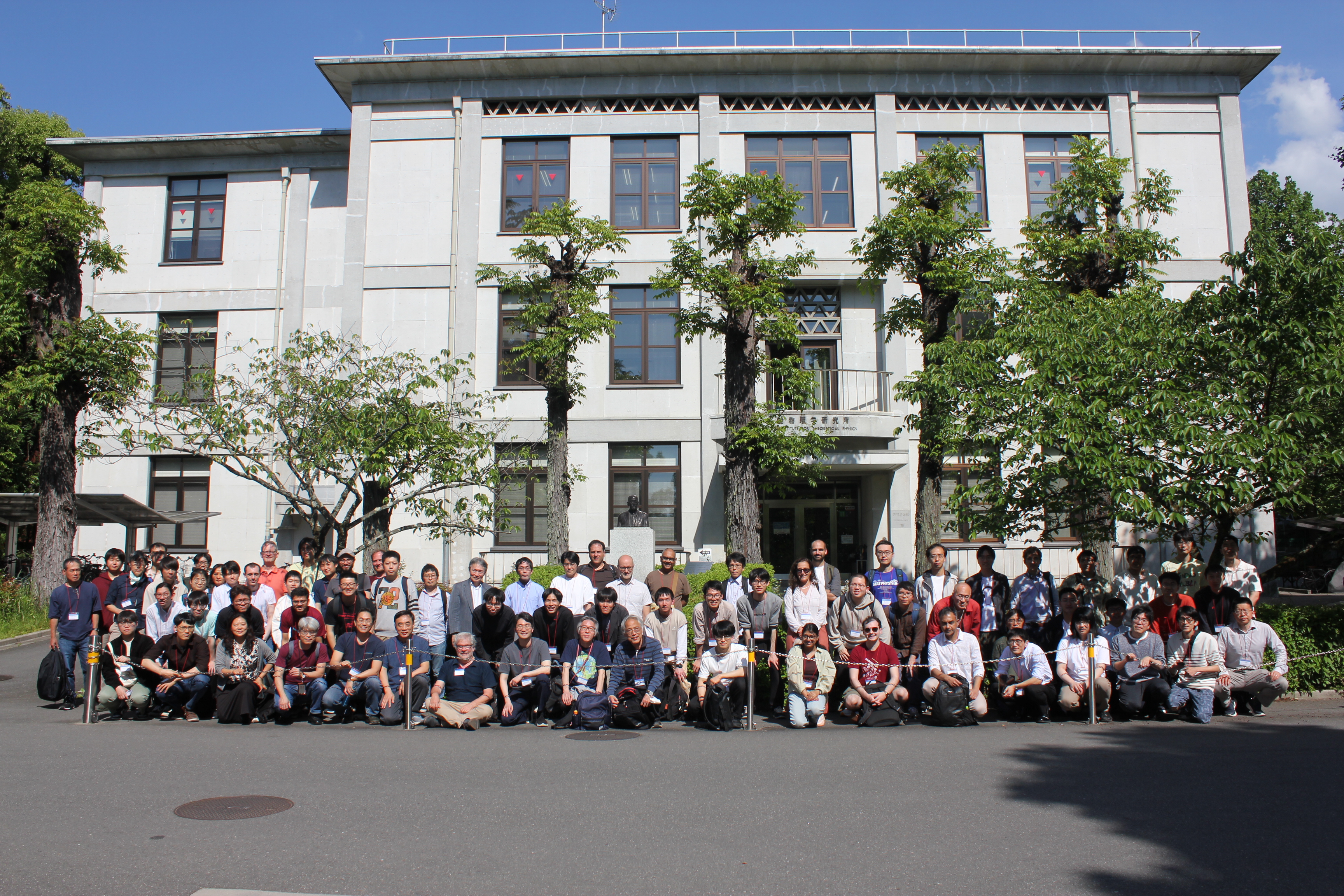
This workshop is organized on the occasion of the visit to Japan by Leticia Cugliandolo, a member of the International Advisory Committee (IAC), and her husband Jorge Kurchan. Both are recipients of numerous prestigious awards, including the Lars Onsager Prize. The aim of the workshop is to bring together researchers in statistical physics from Japan, France, East Asia, and India, in order to facilitate the exchange of ideas and promote new collaborative research. To this end, we have broadly solicited contributions in nonequilibrium statistical physics, including active matter, soft matter, mathematical physics, machine learning, quantum thermodynamics, and stochastic thermodynamics.
We have invited more than 25 speakers. While we have intentionally included a relatively large number of speakers based in Japan—particularly from the Kansai area—there are nevertheless 11 invited speakers of non-Japanese nationality, making this a genuinely international meeting. The Japanese speakers have also been carefully selected, including two recipients of the Nishina Memorial Prize, and we have succeeded in assembling a broad and representative group of researchers in nonequilibrium physics. As a result, this workshop offers an excellent opportunity to obtain an overview of the current state of the field and to discuss its future directions.
Leticia F. Cugliandolo (Sorbonne University)
Jorge Kurchan (École Normale Supérieure)
Pik-Yin Lai (National Central University)
Jae Sung Lee (KIAS)
Leihan Tang (Westlake University )
Limei Xu (Peking University)
Mahesh Bandi (OIST)
Simone Pigolotti (OIST)
Tridib Sadhu (Tata Institute of Fundamental Research)
Sumilan Banerjee (Indian Institute of Science)
Hal Tasaki (Gakushuin University)
Masahito Ueda (University of Tokyo)
Kazumasa A Takeuchi (University of Tokyo)
Ken Funo (University of Tokyo)
Yoshihiko Hasegawa (University of Tokyo)
Tomohiro Sasamoto (Institute of Science Tokyo)
Ryo Hanai (Institute of Science Tokyo)
Takashi Mori (Keio University)
Hajime Yoshino (Osaka University)
Kyogo Kawaguchi (RIKEN)
Hiroyasu Tajima (Kyushu University)
Shinichi Sasa (Kyoto University)
Keiji Saito (Kyoto University)
Andreas Dechant (Kyoto University)
Marie Tani (Kyoto University)
Kiyoshi Kanazawa (Kyoto University)
March 31st, 2026
Yukawa Institute for Theoretical Physics
After recalling some of the defining properties of the motion of classical active partices, I will introduce and characterize different models for an active quantum particle where activity arises from engineered dissipation-- specifically, from a suitably coupled nonequilibrium environment. These include a model of a particle moving on a lattice with coherent and dissipative hopping, as well as quantum generalizations of well-studied models of active behavior, such as the active Ornstein-Uhlenbeck process, run-and-tumble dynamics, and the active Brownian particle. Despite the different microscopic mechanisms at play, all these models display key features of active motion. Notably, a crossover from diffusive to active-diffusive behavior at long times, leading to an effective Péclet number, as well as a strong sensitivity to boundary conditions which, in the open quantum system context, arises from the Liouville skin effect. I will briefly discuss possible experimental realizations with superconducting circuits or cold gases, closing with perspectives for many-body effects in quantum active matter.
Talk based on
arXiv:2603.19094
by Jeanne Gipouloux, Matteo Brunelli, Leticia Cugliandolo, Rosario Fazio,
and Marco Schirò
Toward a theoretical understanding of a novel phenomenon—flux-induced stabilization of metastable states in non-equilibrium phase coexistence—we study discrete models under external driving. By analyzing the Zubarev-McLennan distribution for these models, we calculate the variational function determining the steady-state configuration of the interface between the liquid and gas regions. The obtained variational function is equivalent to that derived from a phenomenological framework called global thermodynamics. As a result, we derive the phase coexistence condition that leads to the flux-induced stabilization of metastable states. This work was done in collaboration with Naoko Nakagawa.
We show that the maximum extractable work (ergotropy) from a quantum many-body system is constrained by “local athermality” of an initial state and “local entropy decrease” brought about by quantum operations. The obtained universal upper bound on ergotropy implies that the eigenstate thermalization hypothesis prohibits work extraction from energy eigenstates by means of finite-time unitary operations. This no-go property implies that Planck’s principle, a form of the second law of thermodynamics, holds even for pure quantum states. Our result bridges two independently studied concepts of quantum thermodynamics, the second law and thermalization, via “intrasystem” correlations in many-body systems as a resource for work extraction.
Control and manipulation of quantum states by measurements and bath engineering in open quantum systems, like in a quantum computer, have emerged as new paradigms in many-body physics. Taking a prototypical example of Josephson junction arrays (JJAs), we show how monitoring through continuous weak measurements and feedback can transform an insulating non-equilibrium steady state in JJAs to a superconductor (SC) and vice versa. We show that the quantum feedback, when not too large, is crucial to realize such a superconducting steady state by maintaining an effective temperature in a semiclassical limit. However, we show that large feedback can destroy superconductivity by enhancing quantum phase fluctuations. Thus, dissipation and phase fluctuations in the presence of monitoring have fundamental differences from those in the well-studied case of JJAs in contact with an equilibrium Ohmic bath. In general, a description in terms of only an effective temperature is not adequate for the monitored JJAs. Using a variational approximation, and by considering various limiting cases, we demonstrate that these differences can give rise to reentrant SC-insulator phase transitions leading to an unusual inverse transition from a seemingly low-effective-temperature insulating normal state to a superconducting state at intermediate temperature.
In this talk, I present an interesting connection between quantum dynamics in an isolated system and that in an open system. Although the dynamics is unitary in isolated systems, we often observe exponential decays of physical quantities in a certain time window. In classical chaos, such exponential decays are characterized by poles of the resolvent of the time evolution operator (or the Hamiltonian) in complex plane, which are known as Ruelle-Pollicott resonances. I will tell you that there is a quantum analogue of the concept of Ruelle-Pollicott resonances in quantum spin systems which are far from the classical limit, and that quantum Ruelle-Pollicott resonances are extracted by investigating noisy quantum dynamics that is obtained by introducing weak noise to the pure unitary dynamics.
The Lorentz mirror model provides a clean setting to study macroscopic transport generated solely by quenched environmental randomness. We introduce a hierarchical version whose distribution of left--right crossings satisfies an exact recursion. In dimensions d>=3, we prove normal transport: the mean conductance scales as (cross-section)/(length) on all length scales. A Gaussian closure, supported by numerics, predicts that the variance-to-mean ratio of the conductance converges to the universal value 2/3 for all d>=2 (the ``2/3 law''). We provide numerical evidence for the 2/3 law in the original (non-hierarchical) Lorentz mirror model in d=3, and conjecture that it is a universal signature of normal transport induced by random current matching. In the marginal case d=2, our hierarchical recursion reproduces the known scaling of the mean conductance and its variance. The talk is based on my joint work with Raphael Lefevere
Stochastic thermodynamics is a powerful framework to formulate various thermodynamic bounds for small systems. However, this framework has largely relied on the Markov assumption for the underlying dynamics, and its application to non-Markov processes with strong memory has been limited, except for a few special classes (like the generalized Langevin equation and the semi-Markov processes). In this talk, we will present stochastic thermodynamics for general non-Markov jump processes. We develop the Fourier embedding as a key mathematical technique to formulate the time-reversal symmetry for general jump processes. Finally, we present several novel non-Markov models that satisfy the second law.
A central quantity of interest in the description of non-equilibrium phenomena is their associated entropy production, which quantifies both their intrinsic irreversibility and their practical energetic cost in the form of dissipation. In recent years, an impressive range of methods for estimating entropy production from observed phenomena, such as currents, oscillations, transition time statistics or cross-correlations, has been developed. However, the overwhelming majority of these results implicitly or explicitly rely on the assumption that all relevant degrees of freedom in the system have even parity, that is, they do not change under time-reversal. In this talk, we explore the consequences of dropping this assumption. We show that, without any assumption on parity, non-equilibrium steady-states cannot be distinguished from equilibrium ones in principle. We also derive conditions for entropy production to be invariant under parity selection and argue for non-adiabatic entropy production as a candidate for a “parity-gauge-invariant” entropy production. Finally, we discuss the consequences of our results for non-Markovian dynamics via Markovian embedding.
The third law of thermodynamics forbids cooling a physical system to absolute zero in a finite number of operational steps. Although this unattainability principle has been quantified for specific state-to-state transitions, a universal, dynamics-independent bound for implementing a state-agnostic reset map remains elusive. In this work, we unveil the fundamental limits of physical map implementation by deriving a trade-off relation based on geometric complexity. By analyzing continuous paths of maps on a geometric manifold, we prove that the geometric complexity of any classical stochastic map or quantum channel is bounded from below by its execution error. As a consequence, we show that achieving zero error in a state-reset operation requires a divergent geometric complexity -- a unified measure that naturally incorporates disparate physical resources, including infinite time, energetic cost, or control bandwidth. This unattainability principle holds universally across both classical and quantum regimes, establishing a strict geometric limit on the physical realization of reset operations in thermodynamic control and quantum computation.
Wave-topology interactions lie at the heart of numerous physical phenomena from condensed matter systems to cosmological models; the well known Aharonov-Bohm (AB) effect in Quantum Mechanics is but a striking example. This effect has classical analogues, notably in fluid dynamics where surface waves scatter off of vortices, creating wavefront dislocations, as shown in a now famous bath tub experiment by Sir Michael Berry and colleagues in 1980. Previous works have focused on traveling waves, with the number of wavefront dislocations determined by a parameter that relates vortex circulation to wave properties. In this talk, I'll present a theoretical, numerical, and experimental study of standing waves scattered by a stationary vortex which induces global (non-local) nodal structures -- lines of zero wave amplitude -- the number of which is quantized, and may exhibit temporal oscillations. This is in striking contrast with earlier observations, where interactions were confined or lacking such topological regularity. Since phase is measurable in classical settings but not a physical observable in the quantum realm, these findings could potentially pave the way for hydrodynamic emulation of quantum interference phenomena. Time permitting, I will touch upon alternative equivalent interpretations of the experimental results from the standpoint of special and general relativity.
Unveiling universal non-equilibrium scaling laws has been a central theme in modern statistical physics, with recent attention increasingly directed toward non-equilibrium phases that exhibit rich dynamical phenomena. A striking example arises in non-reciprocal systems, where asymmetric interactions between components lead to inherently dynamic phases and unconventional criticality near a critical exceptional point (CEP), where the criticality arises from the coalescence of collective modes with an existing Nambu-Goldstone mode. However, the universal scaling behavior that emerges in this system with full consideration of many-body effects and stochastic noise remains largely elusive. Here, we establish a dynamical scaling law in a generic one-dimensional (1D) stochastic non-reciprocal O(2)-symmetric system. Through large-scale simulations, we uncover a new non-equilibrium scaling in the vicinity of the CEP, distinct from any previously known equilibrium or non-equilibrium universality classes. We report an anomalously large roughening exponent αCEP=1.35(5), which is to be compared with those of simple diffusion αEW=0.5. In regimes where the system breaks into domains with opposite chirality and spatiotemporal vortices inevitably emerge, we find that fluctuations are strongly suppressed, leading to a logarithmic scaling as a function of system size L that manifests a short-range correlation. This work elucidates the beyond-mean-field dynamics of non-reciprocal matter, thereby shedding light on the exploration of criticality in non-reciprocal phase transition across diverse physical contexts, from active matter and driven quantum systems to biological pattern formation and non-Hermitian physics.
Starting from the Smoluchowski for cell density profile in both spatial and orientational coordinates, we analyze the emergence of collective elliptical motion recently observed in quasi-2D bacterial suspensions. Within this framework, a necessary condition for the instability is the phase-leading response of swimming cells against periodic shear flow, in which case energy flows from cells into the medium. This requires the swimming speed of bacteria to be sufficiently high and tumbling rate sufficiently small. Under certain simplifying assumptions, a phase diagram spanned by cell Peclet number (a measure of nonequilibriumness) and effective film thickness is constructed, delineating the transition from a passive phase-lag regime to an active phase-leading regime. Spontaneous motion further requires cell density exceeds certain threshold so that the total energy injection due to swimming offsets dissipation in the viscous fluid. These conditions are in good numerical agreement with experimental observations. Going beyond the linear response theory, we will present analytical and numerical results for the oscillation amplitudes, and more importantly, mechanisms that lift the degeneracy of linear and circularly polarized modes into elliptical orbits.
Disordered systems are not entirely random; they often harbor “hidden order” that cannot be captured by conventional structural descriptors. Understanding this “order within disorder” is key to uncovering the microscopic mechanisms of nonequilibrium phase transitions and to enabling the control of material properties.This report addresses the problem from both structural and spectral perspectives. At the structural level, we analyze the emergence of local ordering in disordered environments and its nonclassical evolution in processes such as crystallization. At the spectral level, we introduce a topological characterization based on vibrational modes to quantify the implicit organizational structure in disordered systems and reveal its connection to mechanical and functional properties.These advances open new avenues for the controlled growth, functional design, and performance characterization of disordered materials.
Stick-slip is a common phenomenon both in nature and in many engineering applications. It is often observed in out-of-equilibrium disordered systems as a yield response to a smoothly varying external force and is characterized by intermittent bursts of irregular signals of different amplitudes, durations, and separations that result from the spontaneous depinning of mechanical contacts or local rearrangement of material bonds. In this talk, I will report on our recent theoretical and experimental studies of a variety of systems exhibiting stick-slip motion due to complex interactions. Three systems will be discussed: (i) dry friction between two (rough) solid surfaces in contact, with the frictional force in mesoscale monitored by an atomic force microscope; (ii) the depinning dynamics of a circular moving contact line over the rough surface with experiments employing direct atomic force microscopy measurements of a micron-sized vertical hanging glass fiber intersecting a liquid-air interface, in which the measured capillary force acting on the contact line exhibits sawtooth-like stick-slip fluctuations; (iii) the dynamics of intracellular vesicle transport across various cell types and intracellular environments. We find that the local maximal force required for slipping/depinning follows extreme-value statistics, and the measured force drop follows avalanche dynamics with a power-law distribution, in good agreement with the Alessandro-Beatrice-Bertotti-Montorsi model or its generalization. The complex stick-slip and avalanches experimental findings are well-described by theoretical models that connect the Brownian-correlated kinetic friction/drag forces. For the cargo transport powered by molecular motors inside a living cell, we reveal a universal transport mechanism characterized by stick-slip motion. By analyzing an extensive dataset of vesicle trajectories from over 480 live cells across diverse vesicle types, cell lines, and cytoplasmic environments, we show that cargo velocities consistently follow a Gamma distribution, a robust statistical signature that persists despite biological variability. Unlike the Gaussian velocity statistics observed for motor trnsport in vitro, this Gamma distribution emerges from Brownian-correlated kinetic friction between motor-cargo complexes and their surroundings.
Quantum technologies offer exceptional -- sometimes almost magical -- speed and performance, yet every quantum process costs physical resources. Designing next-generation quantum devices, therefore, depends on solving the following question: which resources, and in what amount, are required to implement a desired quantum process? Casting the problem in the language of quantum resource theories, we prove a universal cost-irreversibility tradeoff: the lower the irreversibility of a quantum process, the greater the required resource cost for its realization. The trade-off law holds for a broad range of resources -- energy, magic, asymmetry, coherence, athermality, and others -- yielding lower bounds on resource cost of any quantum channel. Its broad scope positions this result as a foundation for deriving the following key results: (1) we show a universal relation between the energetic cost and the irreversibility for arbitrary channels, encompassing the energy-error tradeoff for any measurement or unitary gate; (2) we extend the energy-error tradeoff to free energy and work costs; (3) we extend the Wigner-Araki-Yanase theorem, which is the universal limitation on measurements under conservation laws, to a wide class of resource theories: the probability of failure in distinguishing resourceful states via a measurement is inversely proportional to its resource cost; (4) we prove that infinitely many resource-non-increasing operations in fact require an infinite implementation cost. These findings reveal a universal relationship between quantumness and irreversibility, providing a first step toward a general theory that explains when -- and how -- quantumness can suppress irreversibility.
Non-Markovian dynamics arise when a system is coupled to a bath with finite correlation time, giving rise to memory effects that allow the bath to temporarily store and return excitations. However, how memory modifies irreversibility and whether it can be exploited to improve thermodynamic performance is not well established. We address this question by employing a Markovian embedding of generalized Langevin dynamics, in which bath memory is encoded in auxiliary modes and irreversible dissipation in a residual Markovian bath. We show that the entropy production defined for the original non-Markovian system upper bounds that of the embedded system, thereby establishing a hierarchy of entropy production under Markovian embedding. Leveraging this hierarchy, we derive non-Markovian extensions of the entropic bound, thermodynamic uncertainty relation, speed limit, and power-efficiency trade-off. For underdamped generalized Langevin systems, we show that Carnot efficiency at finite power remains unattainable for ordinary spectral densities. In the overdamped regime, we extend the hierarchy and show that the memory force gives a negative correction to the apparent Markovian entropy production. We further discuss the extension of the hierarchy to the quantum regime.
Thermodynamic uncertainty relations show that high precision in thermodynamic processes requires a physical cost, such as entropy production or dynamical activity. In this talk, I will discuss recent developments of these relations from two viewpoints. First, I will introduce fundamental precision limits in finite-dimensional quantum thermal machines. Conventional thermodynamic uncertainty relations suggest that precision can be improved by increasing entropy production. However, in realistic finite-dimensional systems, physical constraints such as the dimension of the system and environment and the energy bandwidth limit the achievable precision. I will explain dynamics-independent bounds on the fluctuations and expectation values of observables, and discuss their implications for quantum thermal machines such as quantum batteries. Second, I will present a replica Markov process approach to thermodynamic trade-off relations. By considering several independent copies of the same Markov process, nonlinear quantities of probability distributions can be treated within a stochastic thermodynamic framework. This method leads to bounds on entropic quantities such as Tsallis and Rényi entropies in terms of dynamical activity. These results provide a new way to extend thermodynamic uncertainty relations to information-theoretic measures.
Understanding the relationship between fluctuations and response is a central problem in nonequilibrium statistical physics. While the fluctuation-dissipation theorem provides this connection near equilibrium, a general framework valid far from equilibrium remains incomplete. In this talk, I present a unified fluctuation-response framework for nonequilibrium Markovian dynamics. For discrete-state systems described by Markov jump processes, we derive fluctuation-response identities and inequalities that relate fluctuations of general observables to their responses to perturbations of transition rates. Extending these ideas to continuous-state systems, we establish a fluctuation-response theory for Langevin dynamics that connects global fluctuations of observables to their responses to perturbations in force, mobility, and temperature. Together, these results reveal a unified hierarchical structure linking various identities and inequalities, in particular clarifying the relationship between the fluctuation-dissipation theorem and thermodynamic uncertainty relations.
References
[1] E. Kwon, H.-M. Chun, H. Park, and J. S. Lee, Phys. Rev. Lett 135, 097101 (2025).
[2] H.-M. Chun, E. Kwon, H. Park, and J. S. Lee, preprint arXiv:2601.16387.
Multi-layer perceptrons (MLP) are feed-forward neural networks that operate deterministically. The forward deterministic process becomes chaotic with strong enough randomness and non-linearity [1]. In this talk we discuss the corresponding backward stochastic process in the MLPs. Using statistical mechanics tools, including the replica method, we found that the forward and backward processes exhibit very similar statistical properties. We discuss implications of the result on machine learning by MLPs [2,3].
[1] B. Poole, et al. "Exponential expressivity in deep neural networks through transient chaos", Advances in neural information processing systems 29 (2016).
[2] H. Yoshino,"From complex to simple : hierarchical free-energy landscape renormalized in deep neural networks", SciPost Phys Core 2, 005 (2020).
[3] H. Yoshino,"Spatially heterogeneous learning by a deep student machine", Phys. Rev. Research 5, 033068 (2023).
The fluctuating‑hydrodynamic framework of macroscopic fluctuation theory (MFT) has been remarkably successful in characterizing non‑equilibrium fluctuations, including large deviations, in diffusion‑dominated systems. Related ideas have also been extended to integrable models that exhibit ballistic transport. In this talk, I will discuss how similar principles can be developed for active systems, whose dynamics are ballistic at short times and diffusive at long times. I will illustrate this approach through explicit computations of large deviations in both lattice and off‑lattice active‑matter models, including standard continuum descriptions such as AOUPs, RTPs, and ABPs. A crucial part of the discussion will involve coarse‑graining the Dean–Kawasaki equation for interacting Langevin dynamics to obtain the corresponding quantitative fluctuating‑hydrodynamic description.
Recently current fluctuations of a class of models have been shown to be described by the so called M-Wright function, which takes the form of nested Gaussian. This was first noted for a classical automaton model, but has been discussed to appear in a wide class of models including the XXZ spin chain. In this talk we explain how the distribution can be derived by an exact calculation for the so-called t0 model, which is the Hubbard model with infinite strength of interaction. The talk is based on a collaboration with K. Fujimoto, T. Ishiyama, T. Kurose, T. Yoshimura.
Reference:
[1] K. Fujimoto, T. Ishiyama, T. Kurose, T. Yoshimura, T. Sasamoto, Exact Anomalous Current Fluctuations in Quantum Many-Body Dynamics arXiv: 2602.24008
Collective motion is widely observed in nature, from schools of fish to bird flocks and insect colonies, where groups can accomplish tasks beyond the capability of individuals. Such phenomena suggest the possibility of scalable force generation, in which macroscopic output increases with the number of active agents; however, this principle remains poorly quantified in active matter systems. We experimentally quantified the collective force generated by kinesin-driven microtubule (MT) swarms using a custom-built electromagnetic tweezer setup. By varying the swarm size, we found that the collective force exhibits a linear dependence on the number of kinesin motors [1]. Our measurements provide the first quantitative estimate of forces generated by thousands of molecular motors acting collectively. Interestingly, the measured force is smaller than that expected from a purely additive contribution of individual motors. In this presentation, we introduce the experimental system and results, and discuss the physical mechanisms underlying collective force generation.
[1] M. R. Rashid, M. Akter, A. M. R. Kabir, K. Sada, T. Hiraiwa, A. Kuzuya, I. Kawamata, M. Tani, and A. Kakugo, ACS Nano, in press
Biological systems show a curious interplay between symmetry and its violation: bodies are bilaterally symmetric, yet robust chirality emerges in internal organs. I will discuss two recent studies along this theme. The first views the mammalian heart as a chiral nematic material, where topological defects and coherent transmural twist organize its contractile mechanics. The second turns to the opposite question, why body plans are so often symmetric, through a hydrodynamic analysis of deformable microswimmers, where we find a dynamical duality within symmetric strokes that uniquely achieves optimal efficiency in viscous fluids. Together, these suggest that the symmetries we see in biology, both broken and preserved, reflect physical principles alongside developmental constraints.
Characteristic transport associated with nontrivial topology has been extensively studied in condensed matter physics and related areas. Recently, this concept has been successfully extended to active matter systems, but experimental realizations have thus far relied on the chirality of the active particles, which limits design capabilities. Here we report a controlled realization of topological edge states in dense bacterial suspension, induced by microfabricated geometry instead of the bacteria's chirality. By constructing networks made of directional channels, we show the edge localization and edge flow of bacteria, which can be associated with nontrivial topology through theoretical modelling. If time allows, we will discuss not only the obtained results but also our perspectives on open problems.
Ref)
Y. Uchida, D. Nishiguchi, and K. A. Takeuchi, arXiv:2601.08243
Pattern formation is ubiquitous in biological development. Tissue patterns are often formed as organisms grow in size. I will discuss examples of how growth affects the physics of pattern formation. My first example will be the arrangement of chromatophores on the squid squin, as an instance of disordered packing on a growing surface. I will then present a two-species toy model to explore potential universal behavior in these systems.
“Designs” are sets of points, for example on a sphere, that have the property that averages of polynomials over the set coincide with averages over the whole sphere. Similarly for the unitary group.
One can make treat these points as interacting particles, and use liquid theory to study the problem.